

 由 Sherry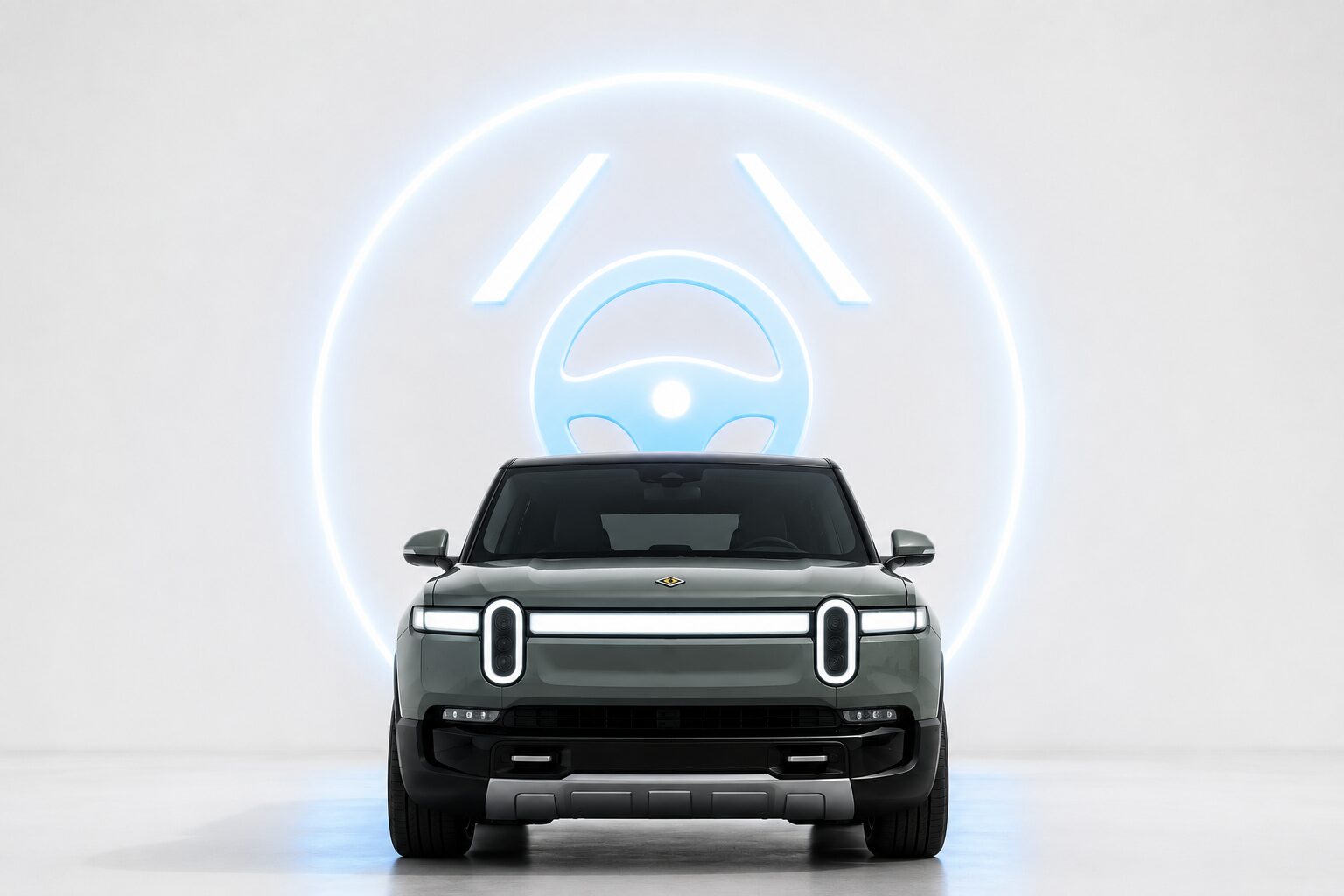
Table of Contents
Today’s Premium Can Become Tomorrow’s Requirement
Rivian CEO RJ Scaringe recently compared autonomous driving features with airbags. There was a time when airbags were expensive options. Eventually, they became expected equipment. Scaringe believes autonomy could follow a similar path: manufacturers may charge a premium while only a few companies have strong systems, but prices should fall as the technology spreads.
The comparison challenges one of the most common assumptions in the auto industry: that whoever solves autonomy first will own an unbeatable software business forever.
Early leadership can be extremely valuable. It can generate data, revenue, customer loyalty, and brand credibility. But a feature can be strategically essential without remaining rare.
Air conditioning, anti-lock brakes, navigation, backup cameras, and smartphone integration all moved from differentiators to expectations. Autonomy may be next.
Why Autonomy Looks Like a Moat Right Now
Today, advanced autonomy requires enormous investment. Companies need specialized chips, cameras or lidar, large data pipelines, simulation, mapping or world models, cloud infrastructure, safety validation, and regulatory teams.
Only a limited group can afford that work. Tesla has spent years collecting fleet data and selling FSD Supervised. Waymo has built a geofenced robotaxi business. Rivian is developing its own autonomy stack and in-house silicon. Chinese automakers are integrating advanced driving features quickly, sometimes at prices Western companies struggle to match.
Because capability is uneven, strong systems can command money. Tesla charges for FSD. Rivian plans to offer Autonomy+ as a paid feature. Robotaxi operators hope driverless service can transform transportation economics.
At this stage, autonomy looks like a moat because the entry cost is high and performance differences are visible.
What Happens When Several Companies Solve It
The economics change when multiple credible systems reach similar capability.
If buyers can choose among several vehicles that offer supervised point-to-point driving, one company will struggle to charge thousands of dollars unless its system is clearly better. Competition will push autonomy into trim levels, subscriptions, bundled services, or the base vehicle price.
China already hints at this future. Some automakers use advanced driver assistance as a way to sell cars rather than as a separate high-margin software product. That pressures Western companies hoping autonomy will produce recurring revenue.
The same happened with safety equipment. Once customers expected airbags and electronic stability control, automakers could not market their absence as a lower-cost choice. The technology became part of the minimum acceptable product.
Autonomy could follow the same curve. What begins as an extraordinary feature becomes a reason a vehicle is considered modern at all.
The Moat May Move Below the Feature
If autonomy becomes standard, competitive advantage does not disappear. It moves.
The moat may become cost. Which company can deliver the capability with fewer sensors, cheaper compute, and lower energy consumption?
It may become data quality. Which system learns fastest from rare events and different regions?
It may become integration. Which vehicle connects autonomy smoothly with navigation, parking, charging, service, and the customer app?
It may become operations. In robotaxis, the winner may be the company that manages charging, cleaning, maintenance, and fleet positioning best.
It may also become trust. Customers and regulators may choose a system not because it has the most ambitious marketing, but because its safety reporting is transparent and its behavior is predictable.
In other words, autonomy may stop being the product and become infrastructure inside the product.
Automakers Still Cannot Afford to Fall Behind
Calling autonomy a future commodity does not make it unimportant. Scaringe’s airbag analogy makes the opposite point.
When airbags became standard, automakers without them were not liberated from investment. They were uncompetitive. If point-to-point driver assistance becomes normal, a company without it may struggle to sell vehicles regardless of how good its engine, battery, or interior is.
That is why Rivian is investing heavily despite uncertainty about long-term pricing. It plans supervised point-to-point capability and has discussed unsupervised driving and robotaxi opportunities. Tesla continues pushing FSD. Legacy automakers are building systems internally or seeking technology partners.
The strategic question is not only, “Can we make money selling autonomy?” It is also, “Can we sell cars without it?”
Early leaders may earn premium revenue. Later, autonomy may become part of the admission price for competing in the market.
The companies that win will not necessarily be the only ones that “crack” self-driving. They may be the ones that turn it into the safest, cheapest, and most natural part of everyday vehicle ownership.
Autonomy can stop being a moat and still become the most important technology in the car.
Source
- Snazzy Labs on X: https://x.com/SnazzyLabs/status/2067103883059675311
- Wired interview with RJ Scaringe: https://www.wired.com/story/interview-with-rivian-ceo-rj-scaringe
- Rivian R2 and Autonomy+: https://rivian.com/r2
- Tesla Full Self-Driving (Supervised): https://www.tesla.com/support/full-self-driving-subscriptions