

 由 Sherry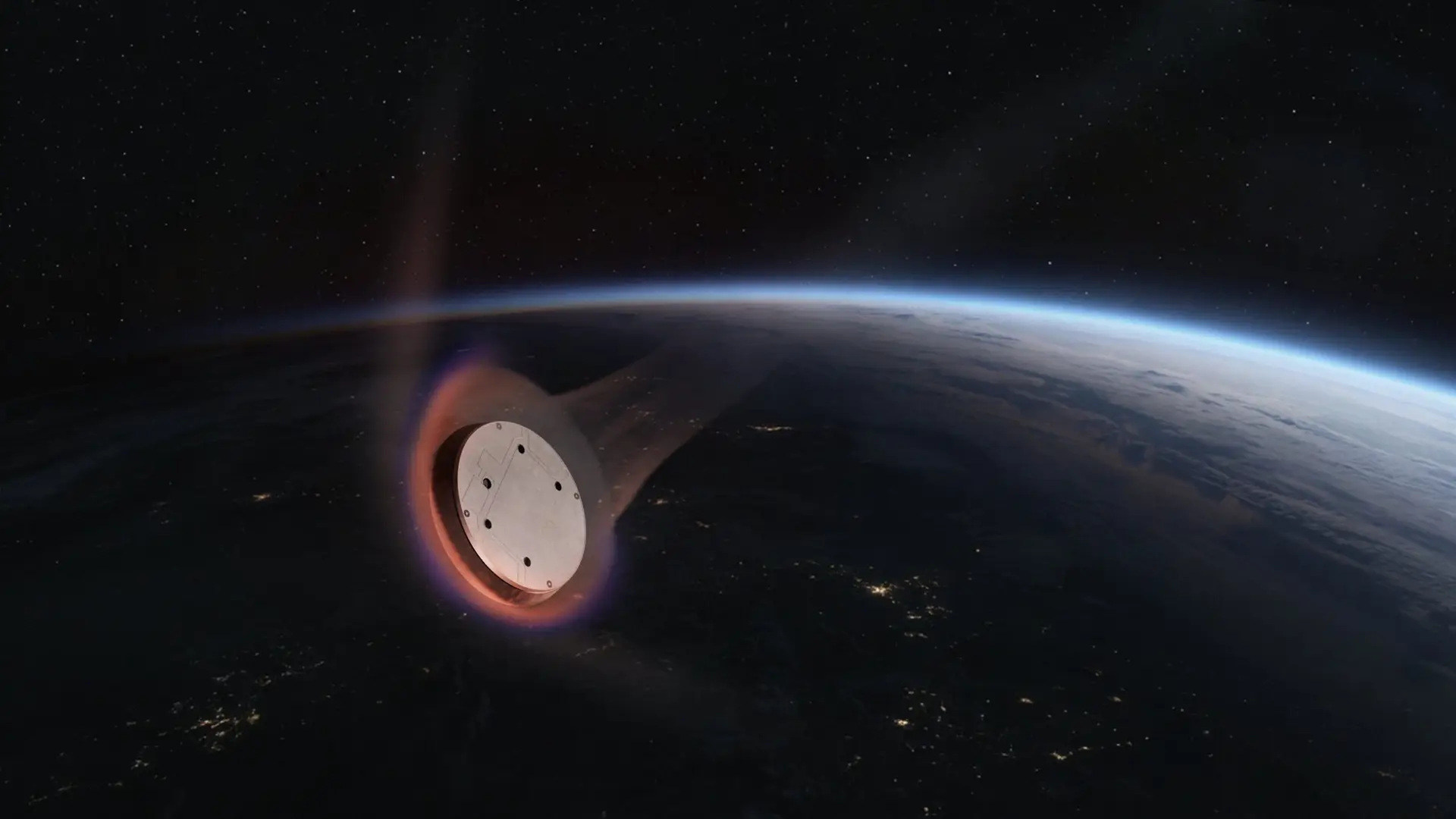
Table of Contents
A small mission with a larger point
SpaceX said Falcon 9 launched the Starfall Demo mission from Florida. On X, Nic Cruz Patane described Starfall as a new disk-shaped reentry vehicle designed to return payloads from low orbit or suborbital flights to Earth, with a reported diameter of about ten feet and a height of about two and a half feet. Sawyer Merritt tied the name to SpaceX’s wider group of “star” concepts, describing Starfall as a way to support microgravity research and in-space manufacturing.
The mission may sound narrow and technical. The larger point is not. For years, the space business has focused on the cost of going up. SpaceX changed that market by making launch more frequent and reusable. The next bottleneck may be getting useful material back down.
If companies want to manufacture materials in microgravity, run biology experiments, test pharmaceuticals, or develop orbital production processes, they need a dependable way to recover the result. Launch access is only half the supply chain.
Returning payloads is harder than it sounds
Reentry is not delivery in reverse. A vehicle coming back from orbit has to survive heat, control its descent, protect the payload, and land or splash down in a way that allows recovery. The payload may also be fragile, temperature sensitive, time sensitive, or valuable enough that recovery reliability becomes the whole business case.
That is why a dedicated return vehicle is worth watching. It suggests SpaceX may be thinking about space logistics as a fuller service: launch, operate, track, protect, and return. The company already dominates launch cadence through Falcon 9 and runs a large satellite business through Starlink. A return layer would add another piece to that infrastructure stack.
The reentry market is still early. Several specialized companies are working on payload return, orbital factories, and microgravity platforms. SpaceX’s edge is that it can attach new services to a launch system that already flies often. If Starfall becomes repeatable, customers may start to see it as a logistics option rather than a one-off experiment.
Microgravity needs a supply chain
The phrase “in-space manufacturing” can sound futuristic, but the business logic is practical. Microgravity changes how some processes behave. Materials can form with fewer gravitational distortions. Biological systems can be studied in unusual conditions. Some products may eventually be worth making in orbit if the performance advantage is worth the transport cost.
Manufacturing is not a single event. It is a chain. You need inputs, power, control, quality checks, storage, return, inspection, and repeatability. Without return logistics, microgravity research stays closer to experiments than scalable production.
Starfall could fill part of that gap. Even if it starts with demos, the question is whether SpaceX can make payload return routine enough for customers to plan around it. The space economy grows when a customer can book a service, estimate timing and cost, and trust that recovery will happen.
Starfall fits SpaceX’s naming pattern and business pattern
The names matter less than the pattern. Starlink turned satellites into a consumer and enterprise broadband network. Starshield adapts satellite capabilities for government and security customers. Stargaze, as described in the X discussion, points toward orbital tracking and collision awareness. Starfall points toward return capability.
Taken together, these concepts show SpaceX moving from launch provider toward space infrastructure operator. It is not only selling rides. It is building layers: communications, defense, tracking, launch, and potentially return.
That strategy works because each layer can support the others. Frequent launches support Starlink. Starlink brings cash flow and operating experience. Orbital awareness helps safety and coordination. Return services could attract research and manufacturing customers who need more than access to orbit.
The real product is operational confidence
The first Starfall demo should not be overhyped. A demo is not a commercial network. Payload capacity, reentry profile, recovery method, pricing, and cadence still matter. But the signal is clear: SpaceX is looking at the less flashy parts of the space economy that ambitious markets will need.
That is often where durable advantage forms. Big launches get attention, but repeatable logistics build industries. Air freight, container shipping, and cloud computing became powerful because customers could rely on infrastructure instead of rebuilding the process every time.
If Starfall grows from demo to dependable service, it could lower friction for scientists, manufacturers, and startups that need Earth-return capability. It could also make SpaceX harder to categorize. The company would be a launch provider, satellite operator, and transport backbone for orbital work.
The broader story is that space is starting to look less like isolated missions and more like an operating environment. Starfall is only one piece. But if payload return becomes routine, it could become one of the quieter steps that made commercial space more practical.
Source
- SpaceX X post on Falcon 9 launching the Starfall Demo mission: https://x.com/SpaceX/status/2069429410965393449
- Nic Cruz Patane X post describing Starfall: https://x.com/niccruzpatane/status/2069438071678861421
- Sawyer Merritt X post on Starfall, Stargaze, and Starshield naming: https://x.com/SawyerMerritt/status/2069480462066860380
- SpaceX Falcon 9 page: https://www.spacex.com/vehicles/falcon-9/
- SpaceX Starshield page: https://www.spacex.com/starshield/