

 由 Sherry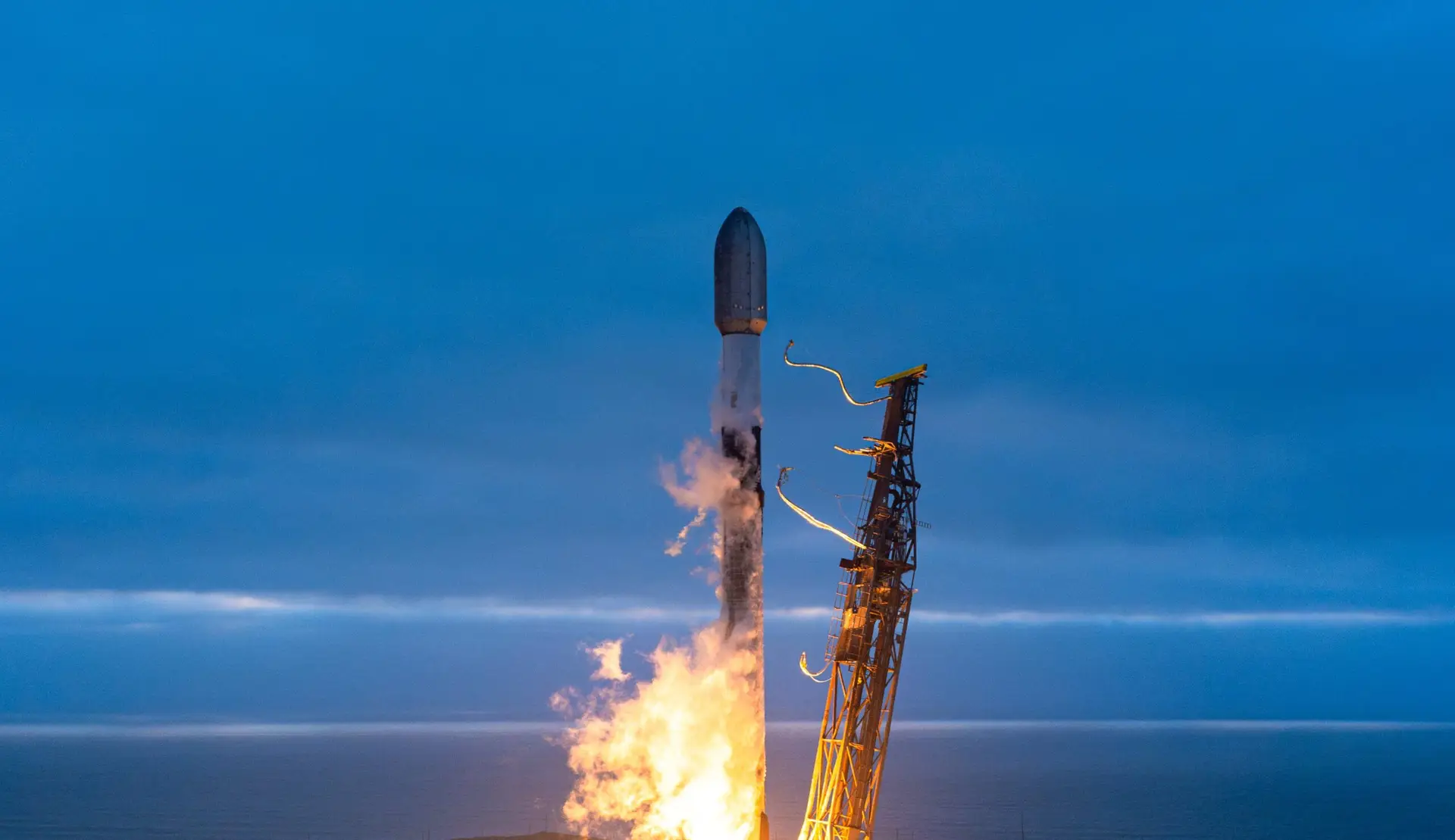
Table of Contents
Routine Is the Product
SpaceX launched 24 Starlink satellites from Vandenberg Space Force Base in California on July 2 UTC. Falcon 9’s first stage returned to the drone ship Of Course I Still Love You, while the upper stage continued toward satellite deployment.
The company summarized the mission in one short sentence. That brevity is revealing. A launch carrying two dozen spacecraft would once have been a major standalone event. For Starlink, it has become part of an operating rhythm.
The mission, identified by launch trackers as Starlink Group 17-46, was SpaceX’s 79th launch of 2026. The booster assigned to the flight was making its seventh trip. Exact fleet counts change quickly, but Starlink already contains more active satellites than any previous constellation.
The achievement is not that this launch looked unusual. It is that SpaceX has made such missions look ordinary.
Falcon 9 Functions Like Network Infrastructure
Starlink is often discussed as a satellite product, but its scale depends on the launch system beneath it. Satellites in low Earth orbit provide lower latency than traditional geostationary systems, yet they cover smaller areas and do not remain fixed over one location. Large numbers are required to provide continuous service.
Falcon 9 acts as the logistics layer for that network. Reusable first stages allow SpaceX to fly frequently without building an entirely new rocket for each batch. Landing does not make a flight free, but it allows expensive hardware to be inspected, refurbished and returned to the manifest.
This changes how satellite capacity can be planned. Instead of waiting years for a few very large spacecraft, SpaceX can add smaller increments repeatedly. New satellites can expand coverage, increase capacity in busy regions or replace older units.
Cadence also shortens the consequences of a delay. When launches are rare, one scrub can disrupt a program for months. In a high-frequency system, individual missions remain important, but capacity growth is distributed across a long sequence.
California Has a Specific Orbital Role
Vandenberg is not interchangeable with SpaceX’s Florida launch sites. Its coastal location is well suited to high-inclination and near-polar trajectories, allowing rockets to head south over the Pacific rather than fly over populated land.
Those orbital paths help Starlink serve higher latitudes and build different layers of the constellation. The California launch operation therefore provides more than geographic redundancy. It gives SpaceX access to orbital planes that complement missions launched eastward from Florida.
The drone ship extends that flexibility. Landing offshore lets the booster reserve more propellant for the ascent than a return to the launch site would permit. The recovered stage can then be transported back for another flight.
Repeated Vandenberg missions have turned the launch pad, recovery ship, port facilities and refurbishment teams into a supply chain. The rocket receives attention, but the pace depends on all of those systems moving together.
A Constellation Must Keep Moving
A terrestrial fiber route can remain in service for decades with maintenance. Low-orbit satellites have shorter operational lives and experience atmospheric drag. They need station keeping, collision avoidance and eventual disposal.
That means Starlink’s launch demand is not limited to initial construction. Even after coverage reaches a mature level, SpaceX must replace aging satellites and respond to failures. New generations may offer greater bandwidth, direct-to-device functions or better efficiency, encouraging upgrades before the network stops growing geographically.
The 24 satellites on one Falcon 9 are therefore both expansion and inventory turnover. Each batch joins a system whose useful capacity depends on satellite health, ground stations, spectrum, software and user demand.
This is why launch count alone can mislead. More satellites do not automatically mean proportional improvements for every customer. Their orbital placement, capacity and connection to the ground network determine the result.
High Cadence Creates New Responsibilities
Routine launch also increases responsibility. Thousands of active satellites require reliable tracking and automated collision-avoidance systems. Failed spacecraft must be designed to leave orbit rather than become long-lived debris.
Astronomers continue to raise concerns about the brightness and radio emissions of large constellations. SpaceX has modified satellite designs and operational practices, but the impact grows with scale. Regulators must also evaluate spectrum use, orbital congestion and the cumulative effects of frequent launches and reentries.
Reliability at high cadence should not become complacency. Reusing boosters many times creates valuable flight history, while every mission still demands disciplined inspection and range safety. The system succeeds when repetition improves learning without making risk feel invisible.
For now, the California mission demonstrates the current system at its most effective: a flight-proven booster, an established pad, an offshore recovery and another batch entering orbit. The launch is easy to overlook because SpaceX has made it repeatable. In infrastructure, being overlooked is often the clearest sign that the system is working.
Source
- SpaceX post: https://x.com/SpaceX/status/2072561934134624613
- SpaceX launch page: https://www.spacex.com/launches/
- Next Spaceflight, Starlink Group 17-46 mission details: https://api.nextspaceflight.com/launches/details/8285
- Space Launch Live, Starlink Group 17-46: https://spacelaunchlive.com/launches/falcon-9-block-5-starlink-group-17-46/
- SpaceX EU Prospectus, June 2026: https://content.spacex.com/cms-assets/FINAL_Documents%20and%20Updates/SpaceX%20-%20EU%20Prospectus%20%28Approved%20by%20Bafin%29%20-%20June%205%2C%202026.pdf
- SpaceX Starlink Mission Overview: https://www.spacex.com/media/starlink_media_kit_jan2020.pdf