

 由 Sherry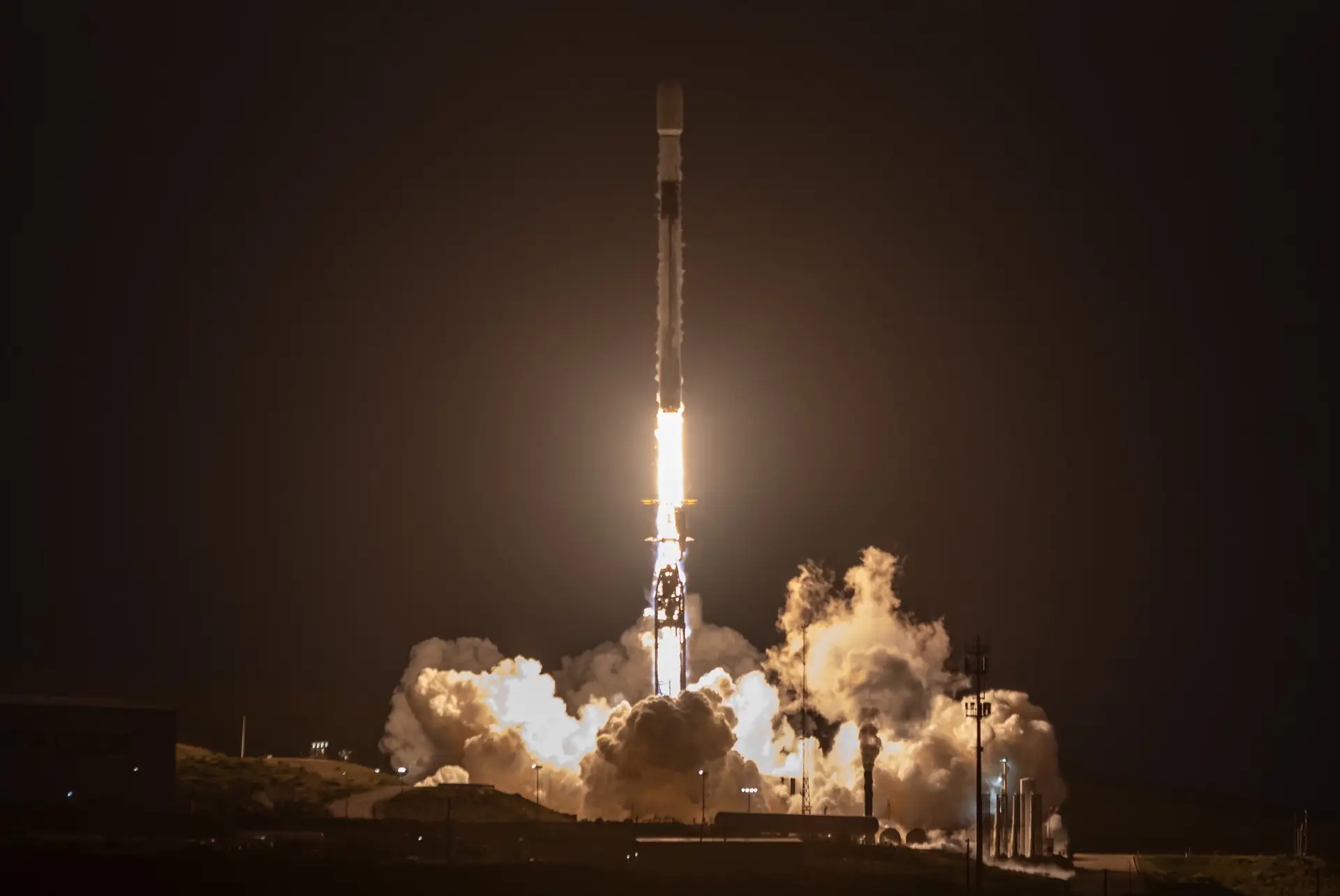
Table of Contents
A beautiful launch, a repetitive strategy
Tesla Owners Silicon Valley posted that Falcon 9 lit up the California night sky while launching 24 Starlink satellites from Vandenberg Space Force Base. It is the kind of launch that looks spectacular in a short clip, especially at night.
The strategic point is not that the launch looked dramatic. It is that SpaceX has made launches like this feel almost ordinary.
That routine quality sits at the center of the Starlink business. A satellite internet network is not built by one historic launch. It is built by repeated deployments, replacements, upgrades, and orbital maintenance.
That is why individual Starlink launches can look repetitive and still matter. Each one adds capacity, refreshes the constellation, or supports a service footprint that now spans consumer, enterprise, mobility, and government markets.
Why Vandenberg Matters
Vandenberg is a West Coast launch site for missions that benefit from certain orbital inclinations, including polar and sun-synchronous trajectories. For Starlink, launch geography helps SpaceX fill and maintain different parts of the constellation.
Regular access to both Florida and California launch operations gives SpaceX flexibility. Weather, range availability, orbit requirements, and booster logistics all affect scheduling. More launch lanes make the deployment machine more resilient.
That matters because Starlink is not a static network. It is infrastructure in low Earth orbit that has to be refreshed constantly.
West Coast launches also give the public a visible reminder of that work. A bright plume over California is the spectacle. Behind it is satellite production, booster reuse, range coordination, and customer demand.
Starlink Depends On Replacement As Much As Expansion
Low Earth orbit satellites have limited lifespans. They have to be replaced, upgraded, and managed. As SpaceX adds users, countries, enterprise services, aviation, maritime, mobility, and government customers, the network has to keep improving.
Launching 24 satellites may not sound as exciting as launching a new rocket, but it is the work that keeps Starlink competitive. Capacity, latency, coverage, and reliability all depend on constellation density and hardware refresh.
In that sense, every routine Falcon 9 Starlink mission is part of an operating cycle. SpaceX is building a network and learning how to replenish one.
That replacement rhythm is easy to underestimate. Low Earth orbit gives Starlink latency advantages, but it also means satellites age out faster than traditional geostationary assets. The business depends on refreshing hardware before users feel the network slipping.
Routine Launches Create Strategic Leverage
SpaceX’s vertical integration gives it a major advantage. It builds satellites, launches them on its own rockets, recovers boosters, operates the network, sells service directly, and supports government and enterprise customers.
That makes launch cadence a product advantage as well as a cost advantage. If SpaceX can deploy capacity faster than competitors, it can respond to demand, improve service, and support new markets more quickly.
It also gives SpaceX value beyond consumer internet. Starlink now matters in aviation, shipping, disaster response, remote work, national security, and military communications. More launches strengthen that position.
The story is operational normalcy
The most impressive part of the Vandenberg launch may be how unsurprising it is. SpaceX has trained the market to expect Falcon 9 to fly, deploy satellites, and return boosters regularly.
That expectation is not boring. It comes from years of engineering, manufacturing, operations, and risk reduction.
Starlink’s future depends on whether SpaceX can keep that cadence while managing regulatory pressure, orbital debris concerns, spectrum competition, and customer growth. The launch of 24 satellites is one more piece of that system.
The night-sky spectacle gets the attention. The repetition builds the business.
SpaceX’s advantage is engineering plus the ability to keep flying while the network keeps needing more capacity.
Source
- Tesla Owners Silicon Valley X post on Falcon 9 launching 24 Starlink satellites from Vandenberg: https://x.com/teslaownersSV/status/2070289944023838854
- SpaceX launches page: https://www.spacex.com/launches/
- Starlink official website: https://www.starlink.com/
- Vandenberg Space Force Base official website: https://www.vandenberg.spaceforce.mil/
- SpaceX Falcon 9 page: https://www.spacex.com/vehicles/falcon-9/