

 由 Sherry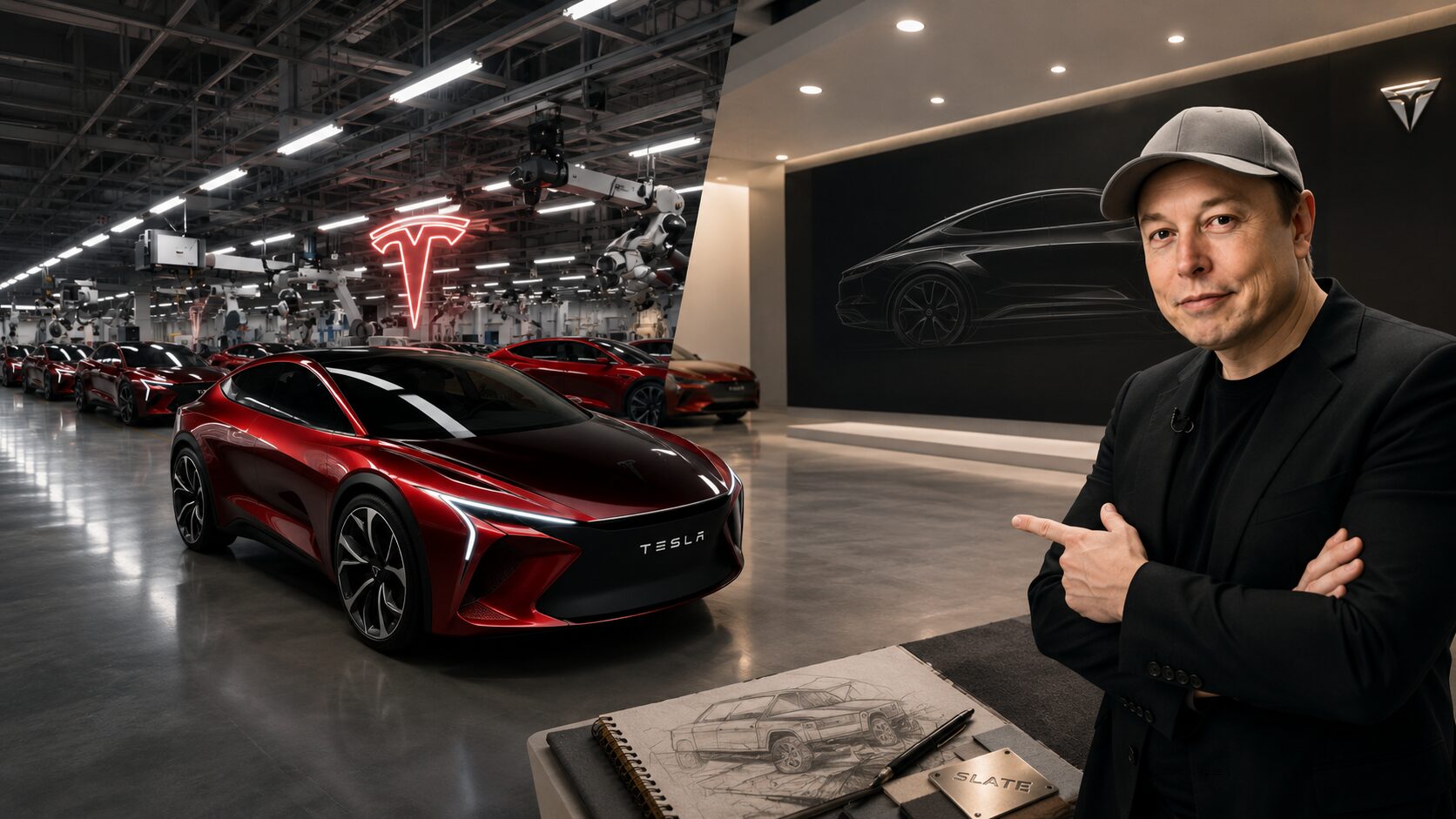
Table of Contents
Two very different affordable-EV stories
MotorTrend published a first ride in the 2027 Slate Pickup, saying Slate confirmed pricing, preorders, and a delivery timeline while offering more range, more towing capacity, and a clearer pricing picture. Elsewhere online, a Tesla fan account claimed a 2026 Tesla Model 2 had opened preorders at $16,990.
Those two items should not be treated the same way. The Slate story is a reported first ride from an automotive publication about a specific vehicle. The Model 2 claim is not supported by Tesla’s official channels and should be treated as a rumor, at best.
Still, the two stories belong in the same conversation because they point to the same demand. The market wants EVs that ordinary buyers can afford.
That demand is practical, not abstract. Many buyers like lower fueling costs and simpler maintenance, but they cannot make the numbers work if the purchase price starts too high. Affordability is the bridge between EV interest and EV adoption.
Slate Has A Real Product Thesis
Slate is not selling luxury. It is selling simplicity. The company is aiming at a low-cost electric truck that can be customized instead of loaded with expensive standard equipment.
That matters because many EVs have moved upmarket. Automakers often launch EVs with large batteries, premium interiors, advanced software, and high trims because margins are easier there. Buyers who need a basic commuter, work vehicle, or second car are left waiting.
Slate’s pickup is interesting because it asks whether an EV can succeed by staying deliberately modest. If the company can deliver useful range, practical utility, and acceptable quality at a genuinely low price, larger automakers may have to rethink entry-level EVs.
MotorTrend’s first-ride framing matters because it moves Slate from concept chatter toward product experience. A ride is not a full road test, but it gives buyers and competitors something more concrete than a rendering.
The Model 2 Rumor Is A Warning Sign
The viral $16,990 Model 2 preorder claim matters because it appears unreliable. Tesla has not officially opened such preorders, and a claim that dramatic would normally appear through Tesla’s own website, app, investor communications, or official social channels.
But the rumor spread because people wanted it to be true. Tesla has long been tied to the idea of a mass-market affordable EV. Every vague “Model 2” or compact Tesla rumor taps into the same expectation: that Tesla will eventually bring its scale and software to a truly inexpensive car.
This is where misinformation becomes a market signal. False claims often attach themselves to real desire.
They also create risk. If buyers repeatedly see fake preorder claims or impossible prices, they may become more cynical about legitimate low-cost EV announcements. That hurts the companies actually trying to build affordable products.
Why Cheap EVs Are So Hard
Affordable EVs are difficult because batteries remain expensive, safety standards are demanding, software expectations are rising, and consumers still want range. A cheap EV cannot simply be a bad EV. It has to feel worth buying new instead of choosing a used gas car or used EV.
Automakers also face a margin problem. Low-cost vehicles are hard to make profitably, especially in the U.S. market, where buyers often expect size, comfort, and highway capability. That is why many “affordable” EVs arrive with caveats: limited availability, higher real transaction prices, or affordability that only works after incentives.
Slate’s approach may work if it keeps complexity down. Tesla’s approach, if a low-cost model ever launches, would likely depend on manufacturing scale and platform efficiency.
Affordability Needs Trust
The affordable EV category needs more than low headline prices. It needs credibility. Buyers have to believe the vehicle exists, the price is real, deliveries will happen, service will be available, and ownership will not feel compromised.
That is why the contrast matters. Slate has to prove execution. Tesla rumor accounts have to be handled carefully. Consumers should not confuse wishful social posts with official product announcements.
The affordable EV race is real, but it will be won by companies that make the numbers believable. A low price only matters when it is attached to a vehicle people can actually buy.
That is why Slate’s execution and Tesla’s official product roadmap matter more than viral price claims. The market wants a cheap EV. It also wants proof.
Source
- MotorTrend first ride of the 2027 Slate Pickup: https://www.motortrend.com/reviews/first-ride-2027-slate-pickup?taid=6a3dc128205767000100baf5&utm_campaign=true_anthem&utm_medium=social&utm_source=twitter&utm_type=organic
- TESLA CARS ONLY X post claiming Tesla Model 2 preorders: https://x.com/teslacarsonly/status/2070314203747934458
- Slate Auto official website: https://www.slate.auto/
- Tesla official website: https://www.tesla.com/
- U.S. Department of Energy EV basics: https://www.energy.gov/energysaver/electric-vehicles