

 由 Sherry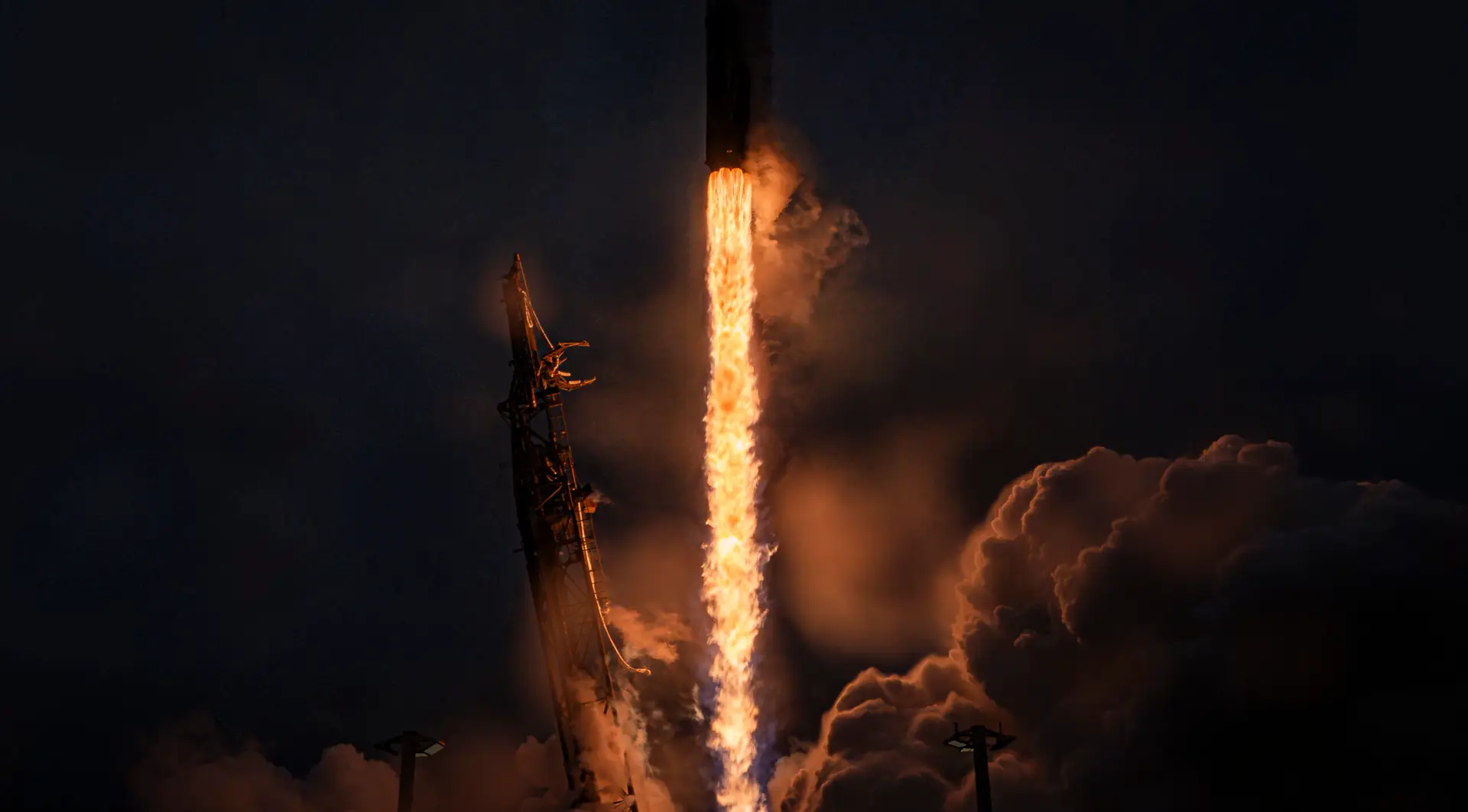
Table of Contents
The Launch Barely Looked Like News
SpaceX launched 24 Starlink satellites from California on a Falcon 9. The company’s announcement was brief, which fits a mission type that now happens with little ceremony.
For Starlink, routine is the point.
A low Earth orbit broadband network needs constant work. Satellites have to be launched, replaced, upgraded, and moved into the right orbits. Their lower altitude helps reduce latency, but each spacecraft covers less ground and has a shorter working life than a traditional communications satellite in a higher orbit.
Starlink therefore needs dependable access to rockets, not an occasional launch.
SpaceX has built that access around reusable Falcon 9 boosters, standardized Starlink payloads, frequent flights, and experienced teams in California and Florida. No single mission transforms the service. The steady stream of missions keeps the constellation growing and replaces hardware before it becomes a problem.
A Busy Schedule Changes the Competition
Most technology companies outsource their hardest logistics. Starlink’s hardest delivery step is reaching orbit, and SpaceX handles it in house.
That gives the company flexibility. It can fit Starlink flights around commercial missions, booster availability, satellite production, and regulatory approvals. It can also use repetition to shorten preparation and improve payload handling and recovery.
A competitor buying launch services has less control. It must secure capacity, work around another company’s schedule, and pay the market price. A delayed launch can mean delayed coverage and delayed revenue.
For Starlink, the launch schedule is part of the product, not a separate aerospace achievement.
Fresh satellites can add capacity where service is crowded, replace older units, open new regions, and support new features. The physical network changes almost as often as its software.
Owning Falcon 9 Changes the Math
Vertical integration does not make any of this cheap. Rockets, satellites, ground stations, recovery ships, and launch facilities cost real money. What changes is how SpaceX can judge that spending.
A Starlink launch may look unattractive as a standalone service mission. It can still make sense if the satellites generate subscription revenue for years. The logic is similar to a retailer paying for warehouses or a cloud company building data centers. Expensive infrastructure supports the recurring business.
Frequent launches also let Starlink change its hardware faster. The satellites have gained capacity and new functions over time. A company with regular rides to orbit can deploy those changes without waiting years for the next launch window.
The two businesses feed each other. Starlink gives Falcon 9 a steady customer and a source of revenue. Falcon 9 gives Starlink a launch path that rivals cannot easily reserve on the same terms.
A Huge Constellation Brings Huge Obligations
Scale creates work as quickly as it creates coverage.
SpaceX has to manage collision risk, deorbiting, astronomical concerns, spectrum coordination, and different national rules. Thousands of satellites also mean an endless replacement cycle. The customer business has to earn enough to support it.
Failures can spread through the system. One bad launch can destroy a batch of satellites. A hardware defect can affect many units. A ground-network outage can disrupt customers across a wide area.
Keeping rockets, satellites, and network operations under one roof makes SpaceX fast, but it also puts much of the risk in the same place.
Satellite count alone does not say whether Starlink is healthy. Capacity, customer experience, terminal cost, regulatory access, and responsible orbital operations matter more than a large number on a chart.
Routine Launches Are the Advantage
The dramatic launches get remembered. The ordinary ones build the service.
Twenty-four satellites will not change Starlink overnight. They add capacity, replace aging hardware, and give the launch teams another repetition of a process they have already done many times.
That accumulated experience is hard to buy. A rival would need more than a good satellite or a good rocket. It would need factories, launch sites, reusable hardware, ground stations, software, regulatory experience, and enough missions for all of those pieces to mature together.
Starlink’s strongest defense may be the speed at which SpaceX can put satellites up, replace them, and send improved versions after them.
The California launch ended, another batch headed toward orbit, and SpaceX turned to the next mission.
That repetition is less cinematic than a maiden flight. It is also much harder to copy.
Source
- SpaceX on X: https://x.com/SpaceX/status/2068763409940705752
- SpaceX launches: https://www.spacex.com/launches/
- Starlink: https://www.starlink.com