

 由 Sherry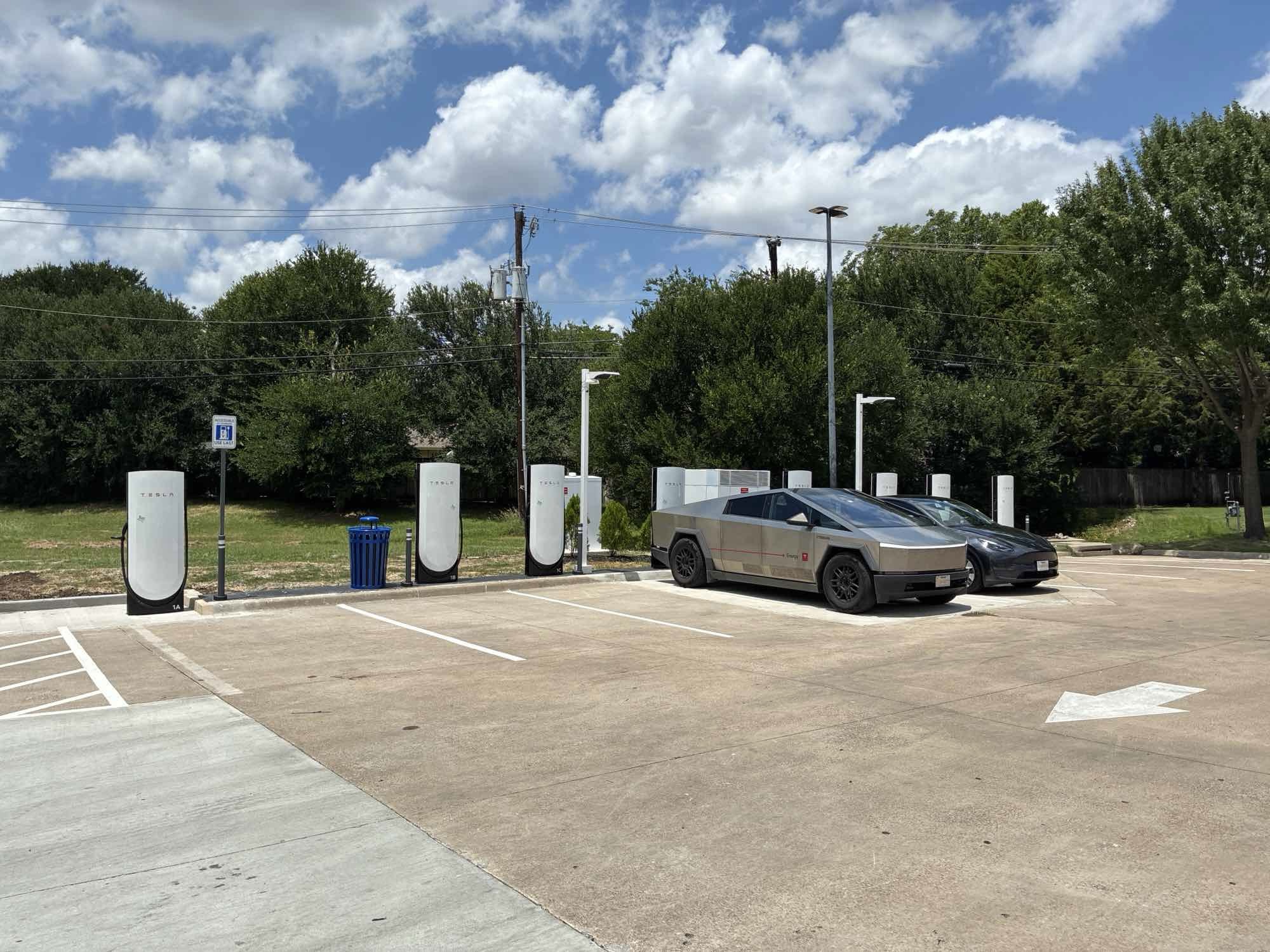
Table of Contents
Eight Stalls Can Fix a Specific Problem
Tesla Charging has opened an eight-stall Supercharger on West Arbrook Boulevard in Arlington, Texas. Next to the large charging plazas that get most of the attention, eight stalls sounds almost minor.
Drivers do not experience a charging network through its biggest station. They experience it when they need a charger and can find one nearby.
Arlington sits inside the Dallas-Fort Worth metro area, where daily travel mixes highways, suburbs, workplaces, entertainment districts, and long drives across town. The new site could serve road trippers, apartment residents, rideshare drivers, visitors, and local owners who need a quick charge.
Its job is not to impress anyone. Its job is to be in the right place.
City Charging Is Not Highway Charging
Highway Superchargers serve a fairly simple pattern: arrive with a low battery, charge, and continue to the next city. Urban and suburban stations have to fit into less predictable routines.
One driver may depend on the site because home charging is impossible. Another may stop before an airport run or between errands. Rideshare and delivery drivers care about reliable access near busy areas, while visitors may plug in during a meal.
Those uses call for different site choices. A highway stop benefits from many stalls and traveler amenities. A city site needs an easy entrance, good lighting, nearby services, and a location people already pass during the day.
Eight stalls can be enough when demand is spread out. The same site can become a headache when several drivers arrive at once.
That is why local traffic and charging data matter more than simply building the largest station that will fit beside an interstate.
The Address Matters More Than the Headline Number
Fast charging is partly an electrical project and partly a real-estate problem.
A workable site needs grid capacity, available land, sensible construction costs, accessible parking, and a property owner willing to host it for years. The place drivers want most may be the place where adding enough power is hardest.
Tesla has years of experience across different property types and can use vehicle data to see where drivers travel and where queues form. That helps it identify a local shortage before the problem becomes obvious from a map.
The Arlington location appears to be an infill site. These stations sit between larger hubs, give drivers another option, and take pressure off a busy location nearby. A network can feel much denser even when each addition is small.
That extra choice matters because charging is easier when a trip does not depend on one station working exactly as planned.
Small Sites Cannot Afford Much Downtime
At a small station, every broken stall is noticeable.
One unavailable charger cuts an eight-stall site’s capacity by 12.5%. Two broken chargers remove a quarter of it. The same failures are easier to absorb at a large plaza.
Maintenance and remote monitoring therefore matter as much as the opening announcement. Drivers also need accurate availability data before they turn into the parking lot.
Tesla’s navigation system gives its sites an advantage here. The car can route to a Supercharger, show availability, and warm the battery before arrival. That connection makes a charger easier to use than one that exists only as a pin in a separate app.
Opening the network to other brands adds complications. Charge ports sit in different places, charging speeds vary, and software integration is uneven. At a small site, one awkwardly parked vehicle can block capacity quickly.
A Mature Network Grows Between the Big Stations
Early charging networks had to prove that an EV could cross the country. The next job is making charging boring enough that drivers stop planning every stop.
Large travel centers are part of that. So are smaller stations near apartments, shops, workplaces, and everyday routes. An eight-stall site can close a local gap and give a metro area some backup capacity.
Demand can still catch up fast. More EVs, heavy rideshare use, and access for non-Tesla vehicles may eventually make eight stalls insufficient.
For now, the Arlington opening is a good example of how networks mature. They add coverage one useful address at a time.
Drivers rarely care whether a station is impressive. They care whether it is available when the battery is low.
Source
- Tesla Charging on X: https://x.com/TeslaCharging/status/2068779203294793888
- Tesla Supercharger location: https://www.tesla.com/findus?location=482157
- Tesla Supercharging: https://www.tesla.com/supercharger