

 由 Sherry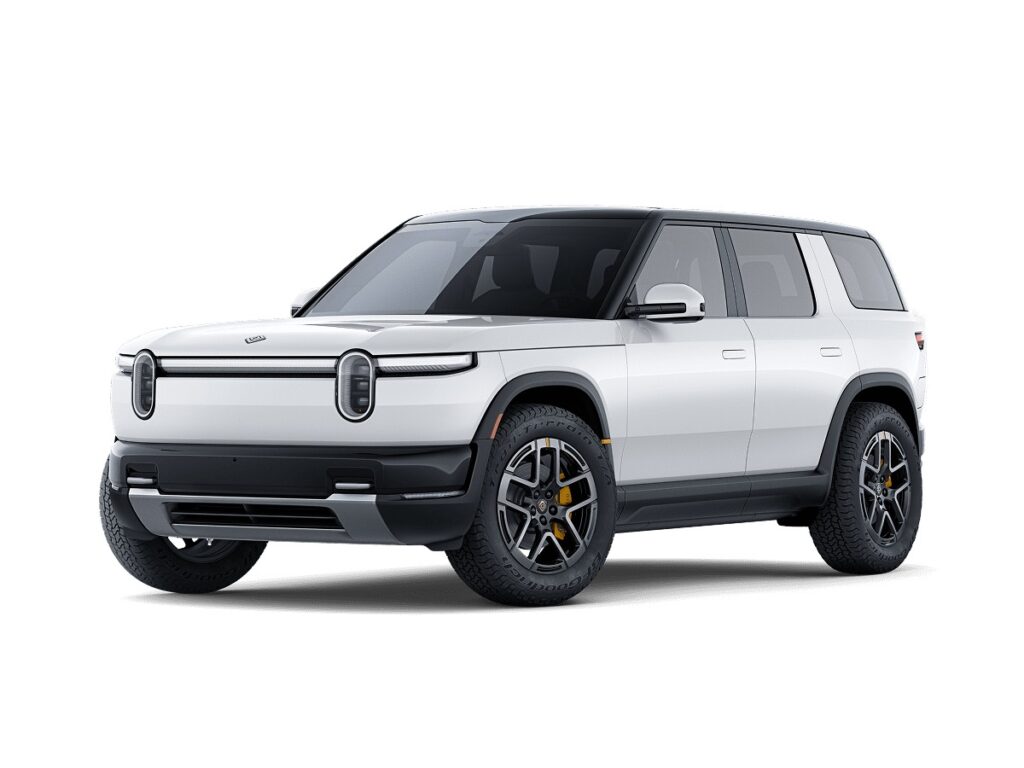
Table of Contents
- R2 Is Rivian’s Mass-Market Test
- Autonomy Is Now Part of the R2 Story
- Why the Tesla Comparison Matters
- The Uber Partnership Shows Rivian Thinking Beyond Retail
- R2 Still Has to Win as a Normal SUV
- The Real Stakes for Rivian
R2 Is Rivian’s Mass-Market Test
The Rivian R2 has always looked like the vehicle that could move Rivian from admired niche brand to serious volume player. The R1T and R1S gave the company credibility with adventure-focused EV buyers, but they are expensive vehicles aimed at a narrower market. R2 is different. It is smaller, more approachable, and priced to compete closer to the heart of the electric SUV market.
Rivian’s official R2 page lists the Standard version starting at $44,990, with Premium and Performance versions arriving earlier and higher in the lineup. The R2 keeps the brand’s outdoorsy identity, but packages it in a two-row SUV that looks easier to live with than an R1S. It offers 9.6 inches of ground clearance, 90.1 cubic feet of total storage, a NACS charge port, and access to over 21,000 Tesla Superchargers across the U.S. and Canada.
That alone makes R2 important. But the bigger story from RJ Scaringe’s new Masters of Scale interview is that Rivian wants R2 to be more than a cheaper Rivian. It wants R2 to become the company’s next software and autonomy platform.
Autonomy Is Now Part of the R2 Story
In the interview, Scaringe said Rivian plans to roll out supervised point-to-point driving later this year across Gen 2 vehicles and R2. He described the system as similar in concept to Tesla’s Full Self-Driving, while keeping it supervised at first. He also suggested that Rivian intends to move toward unsupervised capability next year.
That is a big statement because it changes how buyers should think about R2. Until now, the vehicle’s appeal has been easy to explain: a more affordable Rivian SUV with strong range, useful storage, real adventure capability, and access to the Tesla charging network. Autonomy adds a different layer. It positions R2 as part of Rivian’s attempt to become a software-defined vehicle company, not just an EV maker with nice design.
Rivian already markets R2 with Autonomy+ features, including hands-free assisted driving on millions of miles of roads in the U.S. and Canada, lane changes on command, advanced cameras and radars, and an onboard processor capable of 200 trillion operations per second. The company is careful to say driver-assistance features do not replace attention or control. That caution matters. But Scaringe’s comments suggest Rivian sees the current system as a foundation, not the endpoint.
Why the Tesla Comparison Matters
Any time an automaker talks about point-to-point autonomy, Tesla becomes the reference point. That is unavoidable. Tesla has spent years turning FSD into a consumer-facing software narrative. Whether people love or criticize FSD, it has shaped expectations for what advanced driver assistance should eventually do: navigate complex routes, respond to traffic, and reduce the driver’s workload beyond simple lane keeping.
For Rivian, the comparison is both useful and dangerous.
It is useful because it tells the market Rivian does not want to stay in the old ADAS lane. The company is not just promising adaptive cruise control with nicer graphics. It is signaling ambition: more autonomy, more software, more future capability.
It is dangerous because Tesla has trained buyers to expect visible progress. Once Rivian enters that conversation, it will be judged not only by the charm of the R2, but by how quickly its software improves. Supervised autonomy is hard. Unsupervised autonomy is much harder. If Rivian overpromises, the backlash could be sharp.
That means Rivian has to walk a careful line. It needs enough ambition to convince customers and investors that R2 has a software future. It also needs enough restraint to avoid making autonomy sound solved before it is.
The Uber Partnership Shows Rivian Thinking Beyond Retail
The most interesting part of Scaringe’s comments may be the business model angle. He connected unsupervised driving to new opportunities, including robotaxi services, and pointed to Rivian’s decision to partner with Uber.
That matters because Rivian does not have to build everything itself. Tesla is trying to control the vehicle, autonomy stack, fleet operation, and robotaxi network. Rivian appears to be thinking more selectively: focus on the vehicle and technology, then use Uber’s distribution and demand network if autonomous services become viable.
That could be a practical strategy. Uber already has riders, routing, marketplace infrastructure, and global brand awareness. Rivian has vehicles, EV engineering, and a growing software stack. If the technology matures, the combination could let Rivian participate in autonomy services without trying to recreate Uber from scratch.
Of course, this is still speculative. Robotaxi economics depend on safety validation, regulation, cost per mile, fleet utilization, maintenance, insurance, and public trust. But the partnership shows Rivian is not thinking of R2 only as a retail SUV. It is thinking about how the same platform could eventually support broader mobility models.
R2 Still Has to Win as a Normal SUV
Autonomy can make the R2 story bigger, but it cannot replace the basics. Most buyers will judge R2 first as a vehicle.
That means price, range, charging, storage, reliability, service access, insurance, and delivery timing will matter more than any future robotaxi idea. A $44,990 starting price sounds compelling, but the most desirable early trims cost more. Rivian still has to prove it can build R2 at scale, control costs, and deliver a smooth ownership experience.
The good news is that R2 seems aimed at a sweet spot. It is smaller than the R1S, but still practical. It keeps Rivian’s adventure image without demanding a luxury-truck budget. Tesla Supercharger access removes one of the biggest EV adoption concerns. The interior and storage package look family-friendly without becoming bland.
That is the core formula Rivian needs: enough capability to feel like a Rivian, enough price discipline to reach more buyers, and enough software progress to make the vehicle feel like it improves after purchase.
The Real Stakes for Rivian
R2 is Rivian’s most important product because it concentrates almost every question about the company into one vehicle.
Can Rivian scale beyond expensive adventure EVs? Can it compete with Tesla’s Model Y territory without becoming a copycat? Can it turn software into a real advantage? Can it convince buyers that autonomy features are useful today and promising tomorrow? Can it use partnerships like Uber to build future options without distracting from vehicle execution?
Scaringe’s interview makes one thing clear: Rivian does not see R2 as merely a smaller SUV. It sees it as the bridge between the company’s current identity and its next one.
If R2 succeeds only as a good electric SUV, that would already be a major step. But if Rivian can pair the R2’s mainstream appeal with credible autonomy progress, the vehicle could become something more important: the product that proves Rivian can compete not only in EV hardware, but in the software-defined future of mobility.
That is the real story. R2 is not just Rivian’s answer to the Model Y. It may be Rivian’s first real attempt to build a platform for the next decade of driving.