

 由 Sherry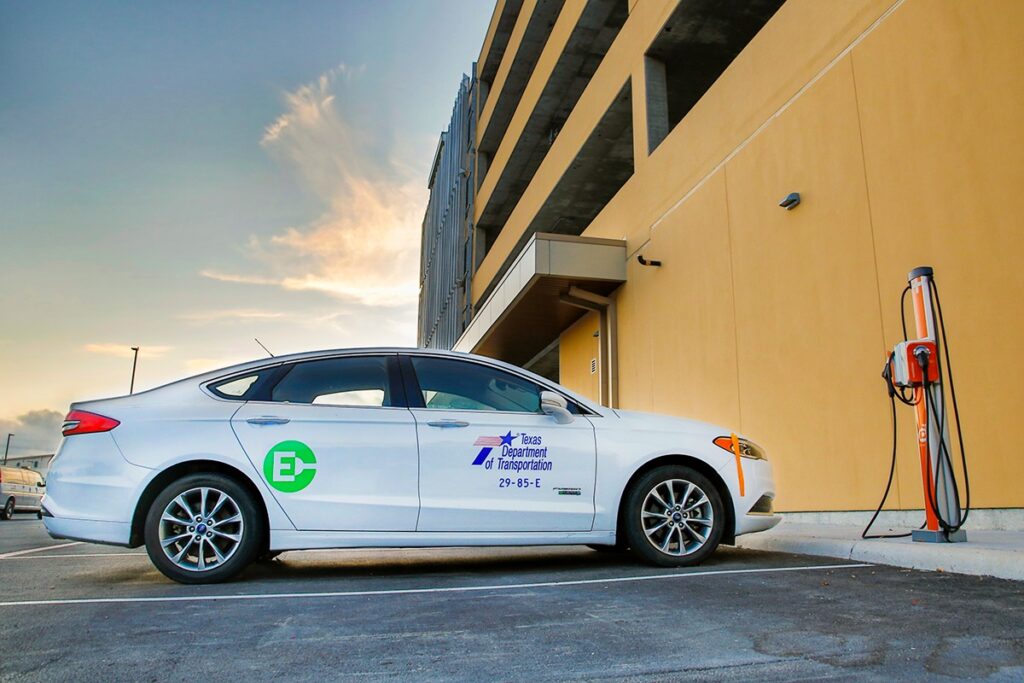
Table of Contents
- The EV Deal Is Changing
- Texas Shows the New Phase Clearly
- Why Governments Think EV Owners Should Pay More
- Why Drivers Feel Like the Promise Was Rewritten
- This Is Not Only Happening in Texas
- The Fairer Question Is How EVs Should Pay
- The Next EV Fight Will Be About Trust
The EV Deal Is Changing
For years, the public message around electric vehicles was simple: buy cleaner, save money, and get rewarded for helping the transition away from gasoline.
That deal is starting to feel different.
EVs are no longer treated only as fragile early-stage technology that needs constant support. In many markets, they are now a visible part of the road. Tesla is mainstream. Hyundai, Ford, GM, Rivian, BMW, Mercedes, Kia, and Volkswagen all sell electric models. Charging infrastructure is still uneven, but EVs are no longer theoretical.
As a result, governments are beginning to act less like promoters and more like tax collectors.
Federal incentives are being reduced or ended. States are adding special EV registration fees. Lawmakers are asking how roads will be funded when drivers buy less gasoline. To EV buyers, this can feel like a bait-and-switch: the same system that encouraged them to adopt EVs is now taking back part of the benefit.
But the story is more complicated than “government hates EVs.” It is really about what happens when a subsidized technology becomes big enough to affect public revenue.
Texas Shows the New Phase Clearly
Texas is one of the clearest examples.
Under Texas law, electric vehicle owners pay a $400 registration fee for a new EV and a $200 annual registration fee after that. The fee applies to electric vehicles with a gross weight of 10,000 pounds or less that use electricity as their only source of motor power. The money goes to the state highway fund.
That $200 number has become a flashpoint because it is easy to understand. An EV owner who expected lower operating costs suddenly sees a separate annual charge that a gasoline vehicle owner does not see in the same way.
Texas lawmakers argue that the fee replaces lost fuel-tax revenue. Gasoline drivers pay road taxes at the pump. EV drivers use the same roads but do not buy gasoline. From a road-funding perspective, the state wants EV owners to contribute.
The policy logic is clear. The political feeling is messier.
If someone bought an EV partly to save money on fuel, the annual $200 fee feels like the state clawing back the savings. It may not erase the entire benefit of home charging, but it changes the ownership math. More importantly, it changes the emotional contract.
The message becomes: thank you for buying the cleaner car, now here is your special bill.
Why Governments Think EV Owners Should Pay More
The road-funding problem is real.
Most American transportation systems were built around fuel taxes. The more gasoline people burned, the more tax revenue flowed into roads and highways. That system was never perfect, but it had one intuitive feature: people who drove more generally paid more.
EVs break that link. A driver can put thousands of miles on public roads while paying little or nothing in gasoline tax. Highly efficient hybrids create a similar problem, just less dramatically.
The National Conference of State Legislatures says vehicle registration fees are a reliable source of transportation funding, while rising fuel efficiency, alternative transportation, and EV adoption are contributing to a declining gas tax base. NCSL reports that at least 41 states now require special registration fees for EVs, and 34 states also assess fees on plug-in hybrids or conventional hybrids.
In that context, Texas is not an outlier. It is part of a national shift.
Governments are not only thinking about climate policy. They are thinking about asphalt, bridges, resurfacing, highway patrol, county roads, and budget gaps. A state can support EV adoption and still worry that its road-funding formula is becoming obsolete.
Why Drivers Feel Like the Promise Was Rewritten
The frustration comes from timing and visibility.
Gas taxes are mostly invisible. Drivers pay them a little at a time inside the price of each gallon. Most people do not receive one annual bill that says, “Here is your gasoline road tax.”
EV fees are different. They show up as a separate registration charge. That makes them feel punitive, even when lawmakers describe them as replacement revenue.
There is also a fairness concern. A flat $200 annual fee does not care whether someone drives 4,000 miles or 24,000 miles. It does not care whether the EV is a small commuter car or a heavier electric SUV. It does not scale like a fuel tax.
That is why some EV owners argue the fee is too blunt. They may accept the idea that everyone should help pay for roads, but they question whether a flat annual charge is the right method.
The bigger emotional issue is that EV buyers were sold a broad savings narrative. Lower fuel cost. Lower maintenance. Possible tax credits. Maybe state incentives. Then, as adoption grows, the incentives shrink and the fees appear.
To consumers, that can look like the government is moving the goalposts.
This Is Not Only Happening in Texas
The Texas fee is part of a larger pattern.
NCSL lists EV fees ranging from $50 in states such as Colorado, Hawaii, and South Dakota to $290 in New Jersey starting in 2028. Some states index fees to inflation. A few, including Delaware, Michigan, Montana, and Oklahoma, have started incorporating vehicle weight into EV or hybrid fee calculations.
At the federal level, the incentive environment has also changed. The IRS states that the New Clean Vehicle Credit, Previously-Owned Clean Vehicle Credit, and Qualified Commercial Clean Vehicle Credit are not available for vehicles acquired after September 30, 2025. The home EV charger tax credit is also nearing expiration in 2026 under current rules.
That combination matters. If purchase incentives disappear while annual fees increase, EV buyers may feel the policy balance has flipped. The government once helped reduce the upfront barrier. Now it is asking owners to contribute back through fees.
This does not mean all EV benefits disappear. Home charging can still be cheaper than gasoline. EV maintenance can still be simpler. Many owners still prefer the driving experience. But the political subsidy era is clearly becoming less generous.
The Fairer Question Is How EVs Should Pay
The debate should not be whether EV owners should pay for roads. They should.
The better question is how.
A flat fee is simple, but it is not very fair. A mileage-based road-user charge would better match road use, but it raises privacy concerns and requires administration. A weight-based system would better reflect road wear, but could become politically difficult. A per-kWh public charging tax might miss home charging. Keeping the gas tax alone no longer works in a world of EVs and high-efficiency hybrids.
Texas chose simplicity: $200 per year. That is easy to collect, easy to explain, and hard to evade. But simplicity comes at the cost of precision.
If governments want public trust, they need to show the math. How much gas-tax revenue does the average EV avoid? How many miles does the average EV driver travel? Should low-mileage drivers pay less? Should heavier vehicles pay more? Should road funding be tied to actual use instead of drivetrain type?
Those questions matter because EV fees are not just accounting. They shape adoption.
The Next EV Fight Will Be About Trust
The early EV era was about persuasion. Governments wanted consumers to try a new technology. Incentives helped overcome high prices, limited charging, and range anxiety.
The next era is about trust.
If governments remove incentives and add fees without explaining why, many buyers will feel tricked. If EV owners are told they are helping the future but then charged in ways that feel arbitrary, resentment will grow. If road funding genuinely needs reform, policymakers should say that plainly and design fees that reflect actual use.
So are governments taking back the EV incentives?
In many ways, yes. But that is not automatically a scandal. It is what happens when a technology moves from protected category to normal vehicle class. The problem is not that EV owners are being asked to contribute. The problem is when the contribution feels disconnected from fairness, usage, and the original promise.
Texas’ $200 EV fee is not just a tax story. It is a warning about the next stage of the EV transition: once electric cars become mainstream, they stop being treated as a cause and start being treated as a revenue source.
That may be financially necessary. But if governments handle it poorly, the biggest cost will not be $200. It will be trust.