

 由 Sherry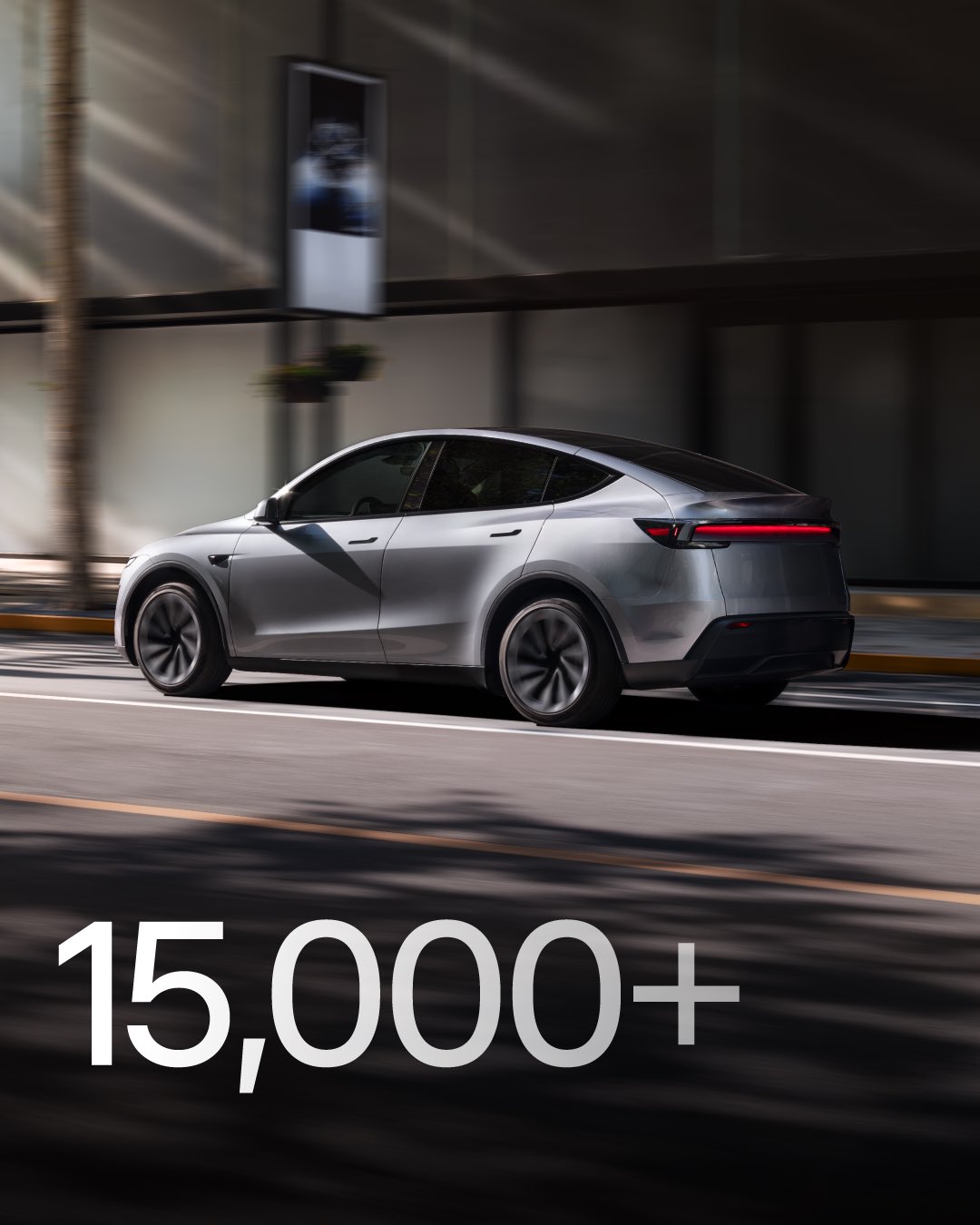
Table of Contents
15,000 deliveries in a changing market
Tesla Malaysia says it has delivered more than 15,000 vehicles in the country. The company entered with direct sales and only a small range of models, so the total shows that Model 3 and Model Y have attracted more than a handful of early adopters.
Malaysia’s wider EV market is also growing. The country’s 2025 investment report recorded 44,813 EV registrations, equal to 5.2% of total industry volume. Buyers now have more models to choose from, including entries from national manufacturers, and EV demand is spreading beyond the premium segment.
Tesla helped make electric cars more familiar to Malaysian buyers, but the competitive field has changed. Chinese brands, locally assembled vehicles and lower-priced national models now compete for the same customers. The question after 15,000 deliveries is whether owning a Tesla remains attractive as those cars age and the market becomes more crowded.
More owners bring higher expectations
Early adopters may accept inconvenience, study charging maps and work around software quirks. Mainstream customers usually expect repairs, insurance and road trips to function without demanding much extra effort.
Fifteen thousand cars create regular demand for spare parts, collision repair and battery checks. Even a reliable fleet produces plenty of service visits once cracked windscreens, damaged panels and routine wear are counted.
Tesla has opened facilities in Cyberjaya, Kuala Lumpur, Penang and Johor Bahru. Those locations improve access, but a visible retail presence does not guarantee fast repairs. Owners will pay close attention to appointment availability, updates during service and the time required to obtain parts.
Coverage becomes harder as sales move beyond the Klang Valley. A smooth service visit in Kuala Lumpur says little to an owner who lives in Johor, Penang, Sabah or Sarawak and faces a much longer trip for support.
Charging has to match where owners live
Tesla’s Supercharger network remains one of its strongest advantages. Local reporting in June counted 19 Malaysian Supercharger sites with 84 stalls, plus 17 Destination Charging locations with 73 chargers. The sites cover major cities and travel routes, while in-car navigation helps drivers plan stops.
The useful measure is whether a stall is open when a driver arrives. Demand will rise with the number of cars on the road, and holiday traffic can fill highway locations quickly. Apartment residents may also rely on public chargers far more than owners who can plug in at home.
Malaysia’s Low Carbon Mobility Blueprint targeted 10,000 charging points by 2025, although earlier government updates showed that deployment was behind schedule. Installation totals also tell only part of the story. Drivers need working chargers with clear prices and simple payment.
Tesla can improve coverage by placing chargers around actual travel patterns. Dense urban sites would help drivers without home charging. Reliable highway stations would support trips between cities, while destination chargers make sense at places where cars already remain parked for some time.
Service and resale values affect new sales
Malaysia now has enough Teslas on the road for a used market to develop. That brings resale value into the new-car decision. Buyers want to know what the vehicle may be worth after several years, how battery health will be checked and whether older hardware will continue receiving useful software.
Price reductions make that calculation less predictable. They can bring in new customers while lowering the market value of cars bought shortly before the change. Software updates can keep an older Tesla feeling current, but they cannot install newer cameras, computers or cabin hardware.
Insurance and body repair matter as well. Slow parts supply or expensive repair procedures can raise premiums and make insurers more willing to write off damaged cars. More qualified repair capacity would shorten downtime and help protect used-car values across the fleet.
The next phase of Malaysia’s EV market
Malaysia is targeting a 15% EV share of new-vehicle sales by 2030 and 80% by 2050. Government policy is moving away from broad support for fully imported EVs and toward local assembly. Tax exemptions for completely built-up EV imports ended after 2025, while incentives for locally assembled vehicles last longer.
That policy puts pressure on Tesla’s imported lineup. The company kept Malaysian prices steady into 2026, but it cannot rely forever on absorbing tax or policy changes. Competitors with local production may gain a cost advantage, especially as national brands move into cheaper parts of the market.
The first 15,000 deliveries give Tesla an established owner base, local brand recognition and a growing charging network. They also produce more service appointments, busier charging periods and a larger number of used cars whose condition buyers need to assess.
The next 15,000 buyers are likely to be less forgiving than the first. They will compare repair times, charger availability, insurance costs and resale values alongside range and acceleration. Tesla’s position in Malaysia will increasingly depend on making those ordinary parts of ownership work well.
Source
- Tesla Malaysia delivery announcement: https://x.com/Tesla_Malaysia/status/2071853170368934311
- Tesla Malaysia locations and 2026 market information: https://www.tesla.com/zh_tw/event/cl-lf26
- MIDA 2025 Investment Performance Report: https://www.mida.gov.my/wp-content/uploads/2026/03/MIDA_IPR.2025.pdf
- MIDA overview of Malaysia’s green-mobility targets: https://www.mida.gov.my/malaysias-shift-towards-green-mobility/
- MIDA summary of Malaysian EV incentives: https://www.mida.gov.my/mida-news/going-ev-what-the-malaysian-government-is-doing-to-charge-up-the-transition/
- Tesla Johor Bahru center and charging-network update: https://carplus.my/2026/06/08/tesla-welcomes-new-experience-centre-in-johor-bahru-model-y-l-deliveries-begin/
- MITI 2026 EV import-policy guidelines: https://www.miti.gov.my/miti/resources/Approve%20Permit/Guidelines/GP_AP_MRA_EV_1_JAN_2026_V2.pdf