

 由 Sherry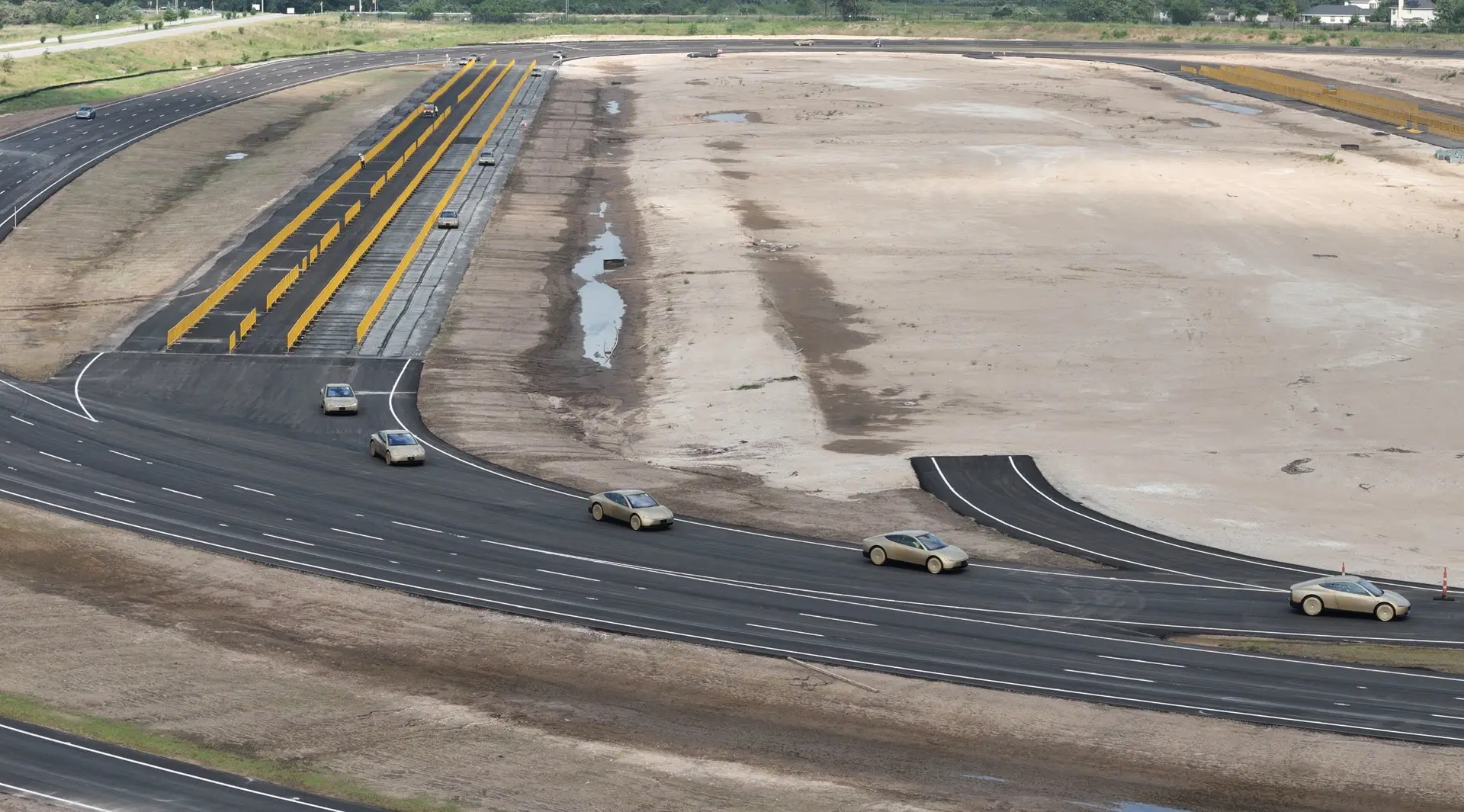
Table of Contents
Ten Cars Create Problems One Prototype Cannot
One Cybercab on the Giga Texas test track can tell engineers plenty about steering, braking, suspension, sensors, and basic autonomous behavior. Ten cars moving together can reveal whether Tesla is starting to test them as a fleet rather than as separate prototypes.
Drone observer Joe Tegtmeyer described the group as the largest number of Cybercabs seen on the track at one time. A pack of nearly identical vehicles naturally makes the program look closer to production, even if the footage alone cannot establish that.
Ten vehicles do not prove that mass production is near or that unsupervised service is ready. They do give engineers more combinations of failures and interactions to study.
Tesla eventually wants thousands of robotaxis sharing the same streets. A ten-car exercise is tiny by comparison, but it can still expose issues involving spacing, fleet communications, dispatch software, and the people running the test.
A Robotaxi Fleet Has to Work as a System
Most autonomy discussions focus on one question: can a car understand the road and reach its destination safely? A robotaxi operator has another problem. It has to keep many cars moving efficiently without letting them get in one another’s way.
When several vehicles leave the same staging area, engineers can watch how they space themselves, merge, form queues, and respond when one stops unexpectedly. They can also check whether every car behaves consistently after a software update.
The exercise can reveal ordinary operational problems too. How quickly can workers inspect and release the cars? What happens when one reports a fault? Can the fleet keep vehicles from blocking chargers, service lanes, or pickup areas?
A private test track is nothing like a crowded city. Its advantage is control: Tesla can repeat the same scenario, change one condition, and compare the result.
The Vehicle and the Software Have to Be Ready Together
Cybercab is not simply another Model 3 or Model Y assigned to ride-hailing work. Tesla designed it specifically for autonomous service. The concept has two seats and no conventional steering wheel or pedals.
That design ties the vehicle’s future to the software and the rules around it. Tesla cannot use Cybercab as intended until regulators allow it and the autonomous system can operate without a human driver. Better software will not create a viable service either if the car is too expensive to build or difficult to maintain.
Testing several Cybercabs near the factory can connect those two sides of development. Small differences between cars may reveal production variation. Repeated track use can expose parts that wear too quickly, while service crews learn which repairs are slow or awkward. Fleet vehicles may cover far more miles than privately owned Teslas, so those problems will surface quickly.
Cybercab Still Has to Prove Its Cost Advantage
Tesla is already learning about ride-hailing with production vehicles. Cybercab is supposed to improve the economics by removing equipment an autonomous passenger service does not need and by using a cabin designed for repeated paid rides.
Removing the steering wheel is not enough. Tesla has to lower the cost of each paid mile after energy, cleaning, tires, repairs, charging downtime, remote assistance, insurance, depreciation, and empty driving are included.
Two seats may reduce weight and energy use, but they also rule out some trips. The interior has to survive constant passengers, and the hardware has to withstand heavy mileage. Frequent human assistance would quickly reduce the labor savings Tesla expects from autonomy.
That is what makes the group test more useful than another stage presentation. Tesla can begin learning whether the cars behave like repeatable fleet equipment, where uptime and consistency matter more than how futuristic the vehicle looks.
What Comes After the Private Track
The next milestones will be less photogenic than adding more prototypes. Tesla needs long test schedules, consistent behavior across vehicles, dependable charging, quick repairs, and operation in settings that are gradually less controlled.
Manufacturing progress and permission to run an autonomous service are separate issues. Tesla can build more Cybercabs without proving that they are ready or legally allowed to drive on public roads without conventional controls.
Still, ten cars on the track suggest Tesla is testing more than whether one Cybercab can drive. It may also be studying how workers prepare, move, monitor, and inspect several of them together.
Robotaxi companies will ultimately compete on repeatable production, fleet coordination, uptime, safety, and cost per ride. A striking prototype is only the opening step.
The ten Cybercabs remain a long way from a large public fleet. For now, the test is useful because it begins to expose the unglamorous work between building a car and operating a transportation service.
Source
- Joe Tegtmeyer, ten Cybercabs testing together at Giga Texas: https://x.com/JoeTegtmeyer/status/2069072518514667935
- Tesla, We, Robot and Cybercab: https://www.tesla.com/we-robot
- Tesla Investor Relations, financial results and company updates: https://ir.tesla.com/
- Tesla Robotaxi: https://www.tesla.com/robotaxi
- NHTSA, Automated Vehicles for Safety: https://www.nhtsa.gov/vehicle-safety/automated-vehicles-safety