

 由 Sherry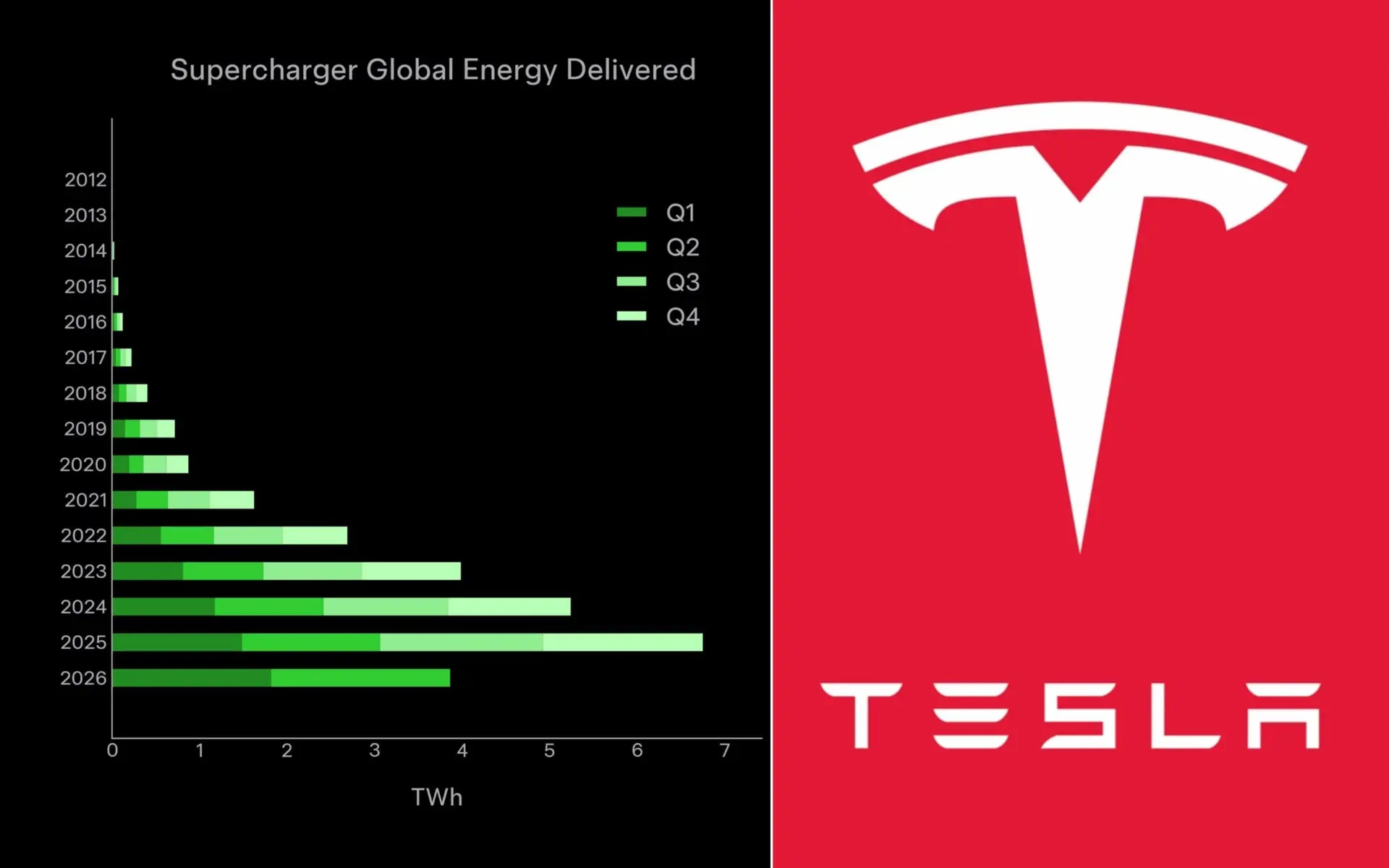
Table of Contents
The better number sits behind the headline
Tesla says its Supercharger network delivered 2 terawatt-hours of electricity during the second quarter of 2026. The company reported about 60 million charging sessions, average delivery of 266 kWh per plug each day and a wait-time rate below 0.5%.
The 2 TWh total is large, but the more useful result is higher energy delivery per connector alongside low reported waiting.
Networks are often ranked by sites and plugs because those figures are easy to count. They do not show whether stations sit on useful routes, remain operational or attract enough drivers to justify their cost. A charger in the wrong place can improve a map without helping many trips.
Utilization shows whether installed equipment is doing regular transportation work.
More sessions without longer waits
Higher use can quickly produce queues. Tesla’s figures stand out because session volume increased while the reported share of time spent waiting fell.
Expansion alone does not explain that combination. Operators must predict where demand will appear, how long cars will occupy stalls and which locations need more capacity. They also need enough spare room for holiday peaks without leaving expensive equipment idle all year.
Sixty million sessions and 2 TWh equal roughly 33 kWh per visit. That looks like the partial refill many drivers take during a trip, rather than a substitute for every home-charging session. Turnover therefore matters as much as the charger’s peak rating.
A 500 kW cabinet does little good when payment fails, stalls are blocked or cars remain connected after charging. Drivers need a dependable stop, not the largest number on the equipment.
Software is part of the charging network
Tesla’s cars can route drivers to stations, warm the battery before arrival and show stall availability. The app handles payment, while station data gives Tesla a detailed view of demand.
Tesla also varies prices to spread use through the day. The company says site-level pricing considers occupancy and expected demand, and some locations use live utilization pricing. Congestion fees can encourage drivers to leave a busy stall once they have enough energy to continue.
Those tools help existing hardware serve more cars. A new location adds capacity, while better routing and session management improve the use of chargers already installed.
Tesla’s 5,000 site maps address a smaller but common problem. Chargers in large car parks or multilevel garages can be hard to find. Clear arrival instructions reduce circling and the delay between one car leaving and another starting a session.
Utilization has practical limits
More energy per plug is not always better. Chargers need maintenance, local grid connections have limits and a site that works on an average day may still become overwhelmed during a travel surge.
Busy locations also need more redundancy. Losing one stall at a quiet site may have little effect. The same failure at a heavily used station can create a line immediately.
A network designed to keep every stall occupied would have no room for unexpected demand. Drivers value the chance of finding an open connector, even when that means some equipment remains unused at quieter times.
Charging competition is becoming operational
Early charging expansion was mainly about coverage between cities. Operators now have to decide when to enlarge sites, how to price congestion and how to support different vehicles without making the stop complicated.
Tesla is adding equipment while pushing more energy through its existing network. The stronger test will come as more non-Tesla cars arrive. Keeping queues low under that added demand would matter more than another quarterly energy record.
Plug count still matters, but reliability, utilization and waiting time describe the experience drivers actually encounter.
Source
- X Freeze post: https://x.com/XFreeze/status/2072408701554897130
- Tesla Support, Supercharging: https://www.tesla.com/support/charging/supercharging
- Tesla Supercharger Q2 report coverage by EV: https://eletric-vehicles.com/tesla/tesla-superchargers-deliver-record-2-0-twh-in-second-quarter/
- Tesla Q2 2025 Update: https://www.tesla.com/sites/default/files/downloads/TSLA-Q2-2025-Update.pdf