

 由 Sherry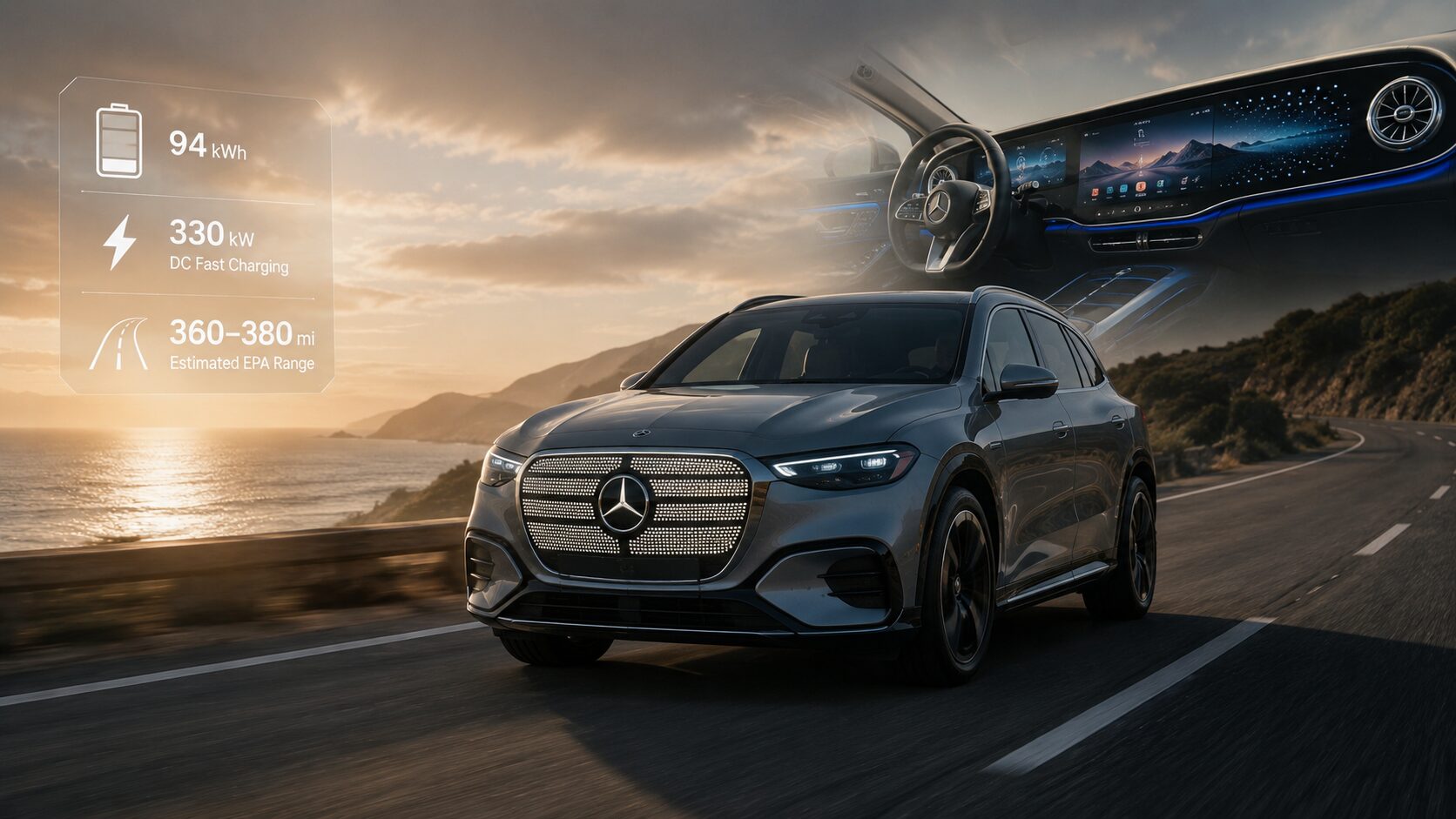
Table of Contents
A specification sheet designed to impress
The 2027 Mercedes-Benz GLC 400 4Matic with EQ Technology arrives with the expected big numbers. MotorTrend reports 483 hp, 590 lb-ft of torque, a 94-kWh usable battery and charging rated at 330 kW. Estimated EPA range is 360 to 380 miles. Buyers can also get a 39.1-inch Hyperscreen, and the rear drive unit uses a two-speed transmission.
That puts the GLC against BMW’s new iX3 and other premium electric crossovers. It also shows how quickly familiar EV technology has become standard. An 800-volt system, over-the-air updates, charging-aware navigation and one large display are now expected on a new premium platform.
MotorTrend’s driving impressions say more than the specification sheet. The publication found the GLC powerful, quiet and composed, with natural brake-pedal response and steering that made the SUV easy to place. It also reported hesitant driver assistance and enough body movement in the soft suspension setting to make some passengers uncomfortable.
The more important technology sits underneath
Mercedes describes MB.OS as the central computing system for its new vehicle family. The GLC has four high-performance computers handling areas such as infotainment, driving, body functions and assistance. Individual control units can receive over-the-air updates. For a company used to combining electronics from many suppliers, that is a substantial change in architecture.
The drivetrain has its own careful details. The all-wheel-drive system can disconnect the front motor to reduce drag when it is not needed. A two-speed rear gearbox supports strong launches and efficient highway driving. Mercedes says the integrated braking system blends regenerative and friction braking while keeping pedal feel consistent.
Drivers use the brake pedal on every trip, so that last detail deserves attention. MotorTrend said it felt natural even during hard driving. That matters more in daily use than another screen animation. Good engineering often becomes noticeable only when a complicated system behaves predictably.
Luxury increasingly depends on software tuning
Premium cars once set themselves apart mainly through materials, smooth engines and a quiet cabin. Those still count, but an electric powertrain removes many traditional cues. Software now controls accelerator response, regenerative braking, steering weight, body movement, route planning and the behavior of assistance systems.
MotorTrend’s experience with lane centering and automated lane changes shows how difficult this can be. An assistance feature may operate safely and still feel unfinished if it slows without an obvious reason, rejects a clear maneuver or leaves the driver guessing about its caution. That uncertainty feels out of place in an expensive car.
The cabin faces the same test. Mercedes’ continuous display and AI assistant look impressive at first. Size alone does not make an interface easy to use. Common controls need to appear at the right time and respond quickly. A smaller system that works without distraction can feel more luxurious than a beautiful one that demands attention.
A soft ride can still feel uncomfortable
The optional air suspension aims for the cushioned ride associated with Mercedes. On smooth roads in Portugal, MotorTrend found the GLC settled in its firmer setting. Comfort mode added enough body movement to make some passengers feel sick.
Heavy EVs make ride tuning difficult. Soft springs do not automatically produce comfort. A large battery puts considerable mass low in the chassis, and the springs, dampers, steering and regenerative braking all have to control it together. Too much body movement can feel unsettled even when individual bumps are well isolated.
Rear-wheel steering, adaptive dampers and predictive software give engineers many ways to tune the car. They also create many combinations that can go wrong. The best result comes when the systems agree, not when the driver gets the longest menu of modes.
What the electric GLC has to deliver
The combustion GLC has long been one of Mercedes’ core models, so the electric version is not a niche experiment. It keeps familiar proportions and has to carry a mainstream luxury nameplate onto a new electrical architecture.
Mercedes says the vehicle can support bidirectional charging with compatible equipment. Its lifecycle study also projects a lower carbon footprint than the combustion GLC under the stated assumptions. An independently certified vegan interior option gives buyers another material choice. These features add substance beyond power and display size.
Daily interactions will decide whether the package works. Fast charging has to be dependable on a trip, and the brake pedal should feel consistent as regenerative braking changes. Driver assistance needs to explain itself clearly. Comfort mode should settle passengers instead of making them uneasy.
The 39.1-inch screen will draw showroom attention. After that first impression, the GLC still has to feel like a Mercedes. That will depend on the quieter work of tuning the drivetrain, suspension, interface and driver assistance until they behave as one car.
Source
- MotorTrend first drive: https://www.motortrend.com/reviews/first-drive-2027-mercedes-benz-glc-class
- Mercedes-Benz GLC winter development report: https://group.mercedes-benz.com/technology/innovation/development/mercedes-benz-glc-with-eq-technology.html
- Mercedes-Benz GLC environmental check: https://group.mercedes-benz.com/sustainability/environment-climate/decarbonisation/environmental-check/glc-with-eq-technology.html
- Mercedes-Benz GLC 360-degree environmental report: https://group.mercedes-benz.com/documents/sustainability/product/mercedes-benz-environmental-check-mb-glc-eq.pdf
- Mercedes-Benz bidirectional charging technology: https://group.mercedes-benz.com/innovations/drive-systems/electric/elf.html
- Mercedes-Benz certified vegan interior: https://group.mercedes-benz.com/sustainability/resources-circularity/materials/vegan-interior.html