

 由 Sherry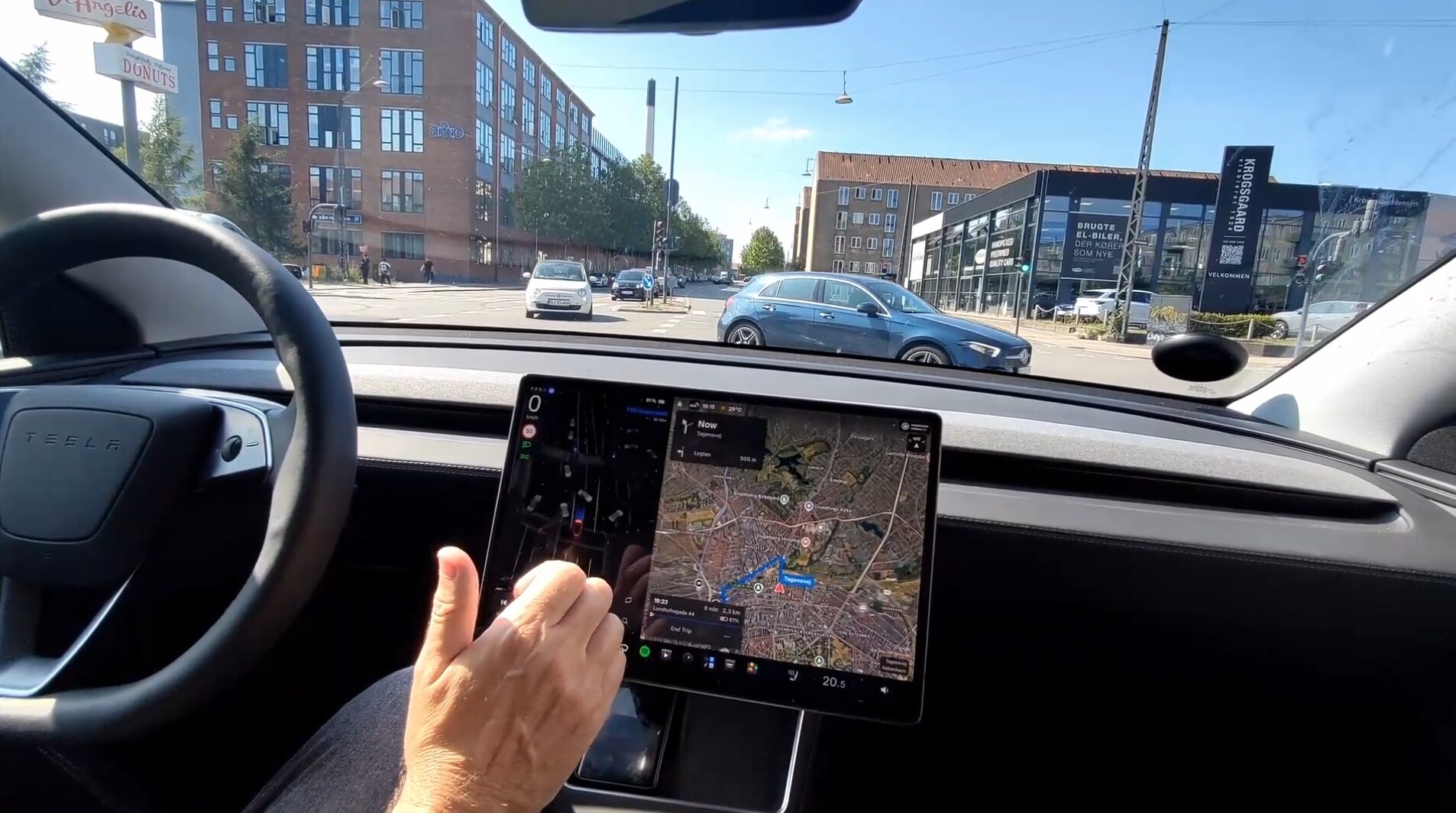
Table of Contents
A short clip with a long shadow
Tesla shared a post saying FSD Supervised avoided a collision in Copenhagen, linking to a video from Christian Hansen, who said Tesla FSD saved his car from a collision. The clip quickly became the kind of example Tesla supporters like: a clear moment where the system appears to help in real traffic.
For Europe, that clip lands at a sensitive time. Tesla FSD remains subject to regulatory caution, public skepticism, and strong owner enthusiasm. One video does not settle the debate, but it shows why the debate keeps coming back.
People do not experience safety as a spreadsheet. They experience it as a near miss.
That gap matters. Regulators have to think statistically, while drivers often think personally. A single avoided collision can feel more convincing to an owner than a long policy document, even if the policy document is what approval decisions require.
Why Collision Avoidance Clips Travel So Fast
A clip showing a car avoiding a possible crash is easy to understand. It has a setup, a threat, and a resolution. Compared with abstract safety statistics, it feels immediate.
That is why these videos move so quickly. A viewer thinks, “that could have been me.” For Tesla, moments like this support the argument that supervised autonomy can reduce human error and react quickly.
But virality is not proof. A clip may show a real benefit, but it does not show the denominator: how often the system helps, how often it hesitates, how often the driver intervenes, and what happens in similar scenarios across thousands of miles.
Europe needs evidence, not anecdotes alone
European regulators have to evaluate systems at a level that social media cannot. They need test data, incident reporting, driver monitoring details, software-change controls, and clear operating limits.
That does not make clips useless. They can point to scenarios worth studying. They can show capability. They can also help the public understand what the system is trying to do.
The hard part is connecting anecdote to evidence. If Tesla wants broader European acceptance, it has to show that clips like the Copenhagen incident are not lucky one-offs, but examples of repeatable safety behavior.
That means Europe’s FSD debate should not dismiss owner videos outright. It should use them as starting points for measurement. Which scenarios are improving? Which remain difficult? What does the system do when drivers, cyclists, and pedestrians behave unpredictably?
Supervised Still Means Supervised
The word “supervised” matters. FSD Supervised is not a driverless system. The driver remains responsible and must stay attentive. That distinction is especially sensitive in Europe, where terminology can shape regulatory and public reaction.
If people treat supervised assistance as full autonomy, they may overtrust it. If critics treat every supervised feature as reckless by default, they may miss possible safety gains. Neither reaction is useful.
A more precise framing is this: FSD Supervised may assist with driving and may help avoid some collisions, but a human driver must monitor it and the system has to be evaluated under clear rules.
The strongest argument is transparency
Tesla’s strongest European case will not come from one dramatic video. It will come from evidence that the system improves over time, handles local roads responsibly, and communicates its limits clearly.
The Copenhagen clip is useful because it gives the debate a concrete example. But Europe will also want to know how the system behaves in rain, dense cycling environments, complex roundabouts, construction zones, and city streets full of unpredictable movement.
If Tesla can connect owner-visible moments to regulator-grade evidence, FSD’s European prospects improve. If the conversation stays stuck between viral praise and blanket suspicion, progress will be slower.
The clip is not the conclusion. It raises a useful question: how many moments like this are happening, and how well can they be measured?
The answer will shape whether FSD in Europe is viewed as a risky American import or as a supervised safety feature that can be tested on local roads under local rules.
Source
- Tesla X post on FSD Supervised avoiding a collision in Copenhagen: https://x.com/Tesla/status/2070253691282887166
- Christian Hansen X post showing the Copenhagen FSD clip: https://x.com/Christian_Rask_/status/2070103983545618720
- Tesla Autopilot support page: https://www.tesla.com/support/autopilot
- Tesla AI page: https://www.tesla.com/AI
- NHTSA automated vehicles safety page: https://www.nhtsa.gov/vehicle-safety/automated-vehicles-safety