

 由 Sherry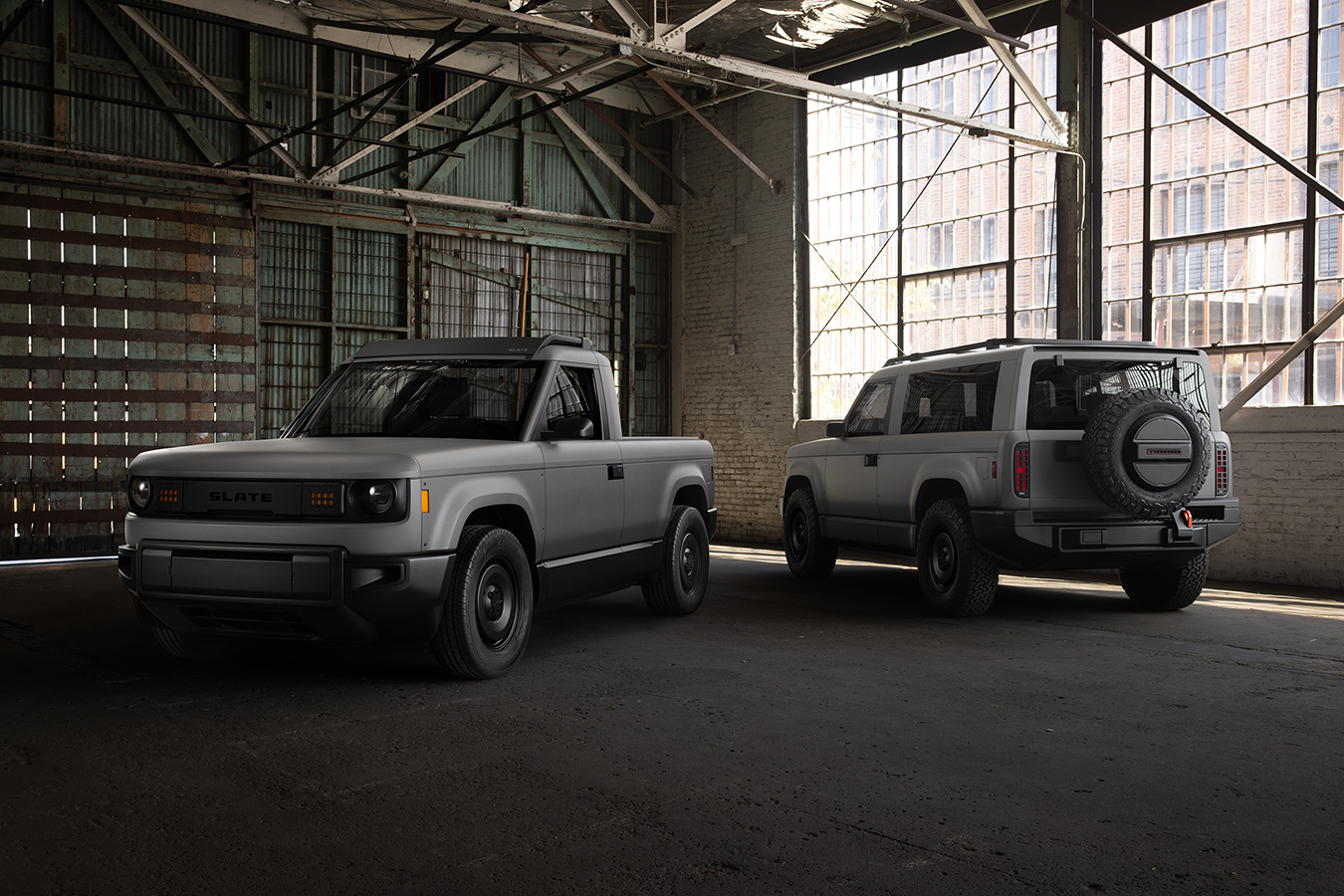
Table of Contents
A price point meant to interrupt the market
Slate Auto’s announced pricing gives the EV market a useful jolt. According to Sawyer Merritt’s post, the company says its small electric truck will start at $24,950 in the U.S., while the SUV version will start at $29,950. The same post lists first deliveries in Q4 2026, 205 miles of range, a 63 kWh battery, 0-60 mph in eight seconds, and a top speed of 90 mph.
Those numbers are not glamorous, which may be the point. The American EV conversation has often drifted toward expensive crossovers, tech-heavy flagships, and performance claims. Slate appears to be asking something more practical: what if the market needs an EV that is closer to a blank canvas than a luxury gadget?
If the company can hold anything close to that starting price, the truck would sit in a rare space. It would compete not only with other EVs, but with used vehicles, compact crossovers, base-model gas cars, and the belief that new EVs are too expensive to consider.
Small and basic may be the feature
The pickup market has grown larger, heavier, and more expensive. Many modern trucks are capable and comfortable, but they are far beyond what some buyers need. A small EV truck with modest performance could appeal to people who want utility without committing to a giant vehicle or a giant payment.
That is a useful opening. Not every truck buyer tows heavy loads. Plenty of people use a bed for tools, garden supplies, small business work, hobbies, furniture, or weekend projects. For those customers, a smaller electric pickup is less about proving toughness and more about getting daily jobs done.
The same logic applies to the SUV version. A sub-$30,000 electric SUV, if Slate can deliver it with acceptable quality and real availability, could become a practical urban or suburban vehicle rather than a status purchase.
The range number shows the target buyer
The reported 205-mile range is not meant to impress EV enthusiasts who compare every model with long-range Teslas or premium Hyundai and Kia products. It is a local-driving number: commuting, errands, trades, and short regional trips.
That matters because affordable EVs do not need to solve every use case. They need to solve enough common use cases at a price people can reach. A 300-mile battery would likely add cost, weight, and complexity. A smaller battery keeps the vehicle focused.
This is where Slate’s product idea could work. The company seems to be avoiding the trap of building a cheap-looking version of an expensive EV. It is instead selling the trade-off clearly: smaller battery, modest speed, lower weight, and a price that makes the compromises easier to understand.
Customization could replace trim inflation
One of the more interesting parts of Slate’s broader concept is customization. The company has presented the vehicle as a platform that can be configured or adapted, including pickup and SUV forms. If that works, it could push against the usual trim-ladder model.
Traditional automakers often use trims to pull buyers upward. The advertised base price gets attention, but the vehicle people actually want costs thousands more. A modular EV could offer another path: start simple, then add what matters.
That fits younger buyers, small businesses, and practical owners who do not want to finance features they never use. It also gives owners room to personalize the vehicle over time instead of buying a fixed factory trim on day one.
Execution is the hard part
The risk is obvious: building cars is brutally difficult. A low announced price does not guarantee profitable production, stable quality, service coverage, parts availability, or real delivery volume. EV startups have learned many times that prototypes and pricing slides are easier than manufacturing.
Slate will need to prove that simplicity can survive safety rules, supplier costs, dealer or direct-sales logistics, warranty obligations, and consumer expectations. Buyers may accept fewer frills. They will not accept poor reliability or confusing support.
Still, the concept is worth watching because it targets a real hole in the market. U.S. EV adoption does not only need more 500-horsepower crossovers. It needs vehicles that make normal buyers pause and think, “I could actually afford that.”
Slate’s small EV truck may or may not become a breakout product. But the idea is timely. The next phase of EV growth needs less spectacle and more accessibility. A simple electric truck at a believable price is exactly the kind of product that can test whether EVs are ready to feel ordinary.
Source
- Sawyer Merritt X post on Slate Auto pricing and specifications: https://x.com/SawyerMerritt/status/2069778572831560055
- Slate Auto official website: https://www.slate.auto/
- U.S. Department of Energy EV basics: https://www.energy.gov/energysaver/electric-vehicles
- EPA Green Vehicle Guide: https://www.epa.gov/greenvehicles