

 由 Sherry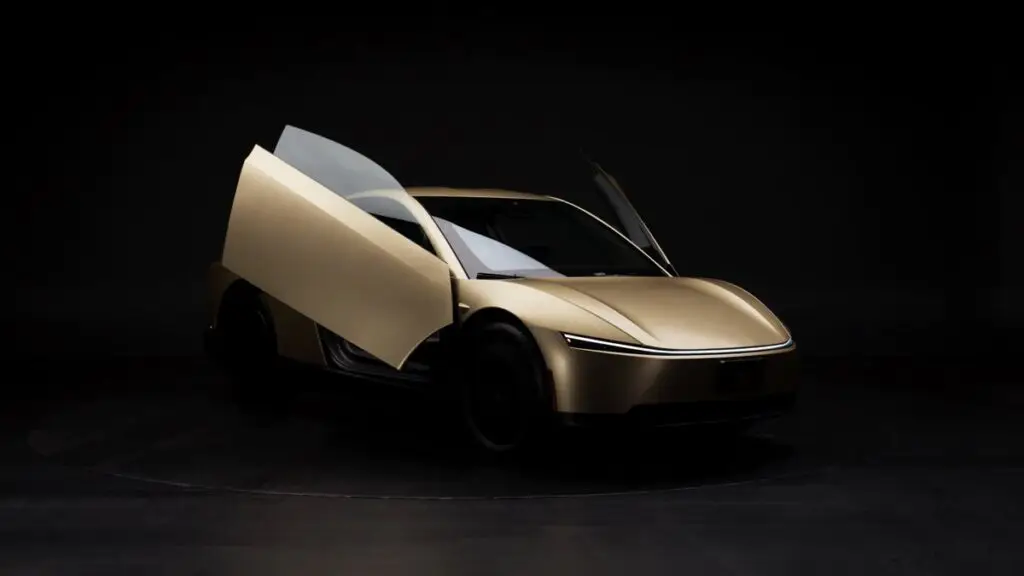
Table of Contents
The Specs Tell a Different Story
Public EPA documents have revealed new Tesla Cybercab details that make the vehicle look very different from a normal consumer EV. The figures being discussed include front-wheel drive, a roughly 48 kWh battery, 219 horsepower, a curb weight around 3,113 to 3,118 pounds, a 3,730-pound GVWR, a 163 kW motor, and a 326-volt electrical architecture.
Those numbers are not supercar numbers. They are not even particularly flashy by Tesla standards. That is the point.
Cybercab is not being designed to win a spec-sheet argument against a Model 3 Performance or Model Y. It is being designed for autonomous mobility, where the most important metric is not 0-60 mph or peak horsepower. It is cost per mile.
If Tesla can make a light, simple, efficient two-passenger vehicle with enough range for high daily utilization, the Cybercab becomes less like a car and more like an asset. That is the way fleet operators think. Every pound, every kilowatt-hour, every tire, every service interval, and every minute of downtime matters.
A Small Battery Can Be a Big Statement
The reported 48 kWh battery is one of the most important numbers. Many EV buyers are trained to think bigger battery equals better vehicle. For private ownership, that often makes sense. More battery means more range buffer, less anxiety, and fewer charging stops.
Robotaxi economics are different.
A robotaxi does not need to satisfy every possible family road trip. It needs to complete predictable urban and suburban driving cycles efficiently. A smaller pack lowers vehicle cost, weight, material demand, and potentially charging time. It also makes sense if the vehicle is designed around frequent high-utilization operation in a managed service area.
Tesla has previously talked about around 300 miles of range for Cybercab. The EPA filing references much higher equivalent range numbers, including 418 miles equivalent all-electric range and 375 highway miles, but final rated range is often lower than raw certification figures. The important takeaway is not the headline range. It is the efficiency implied by a small battery and useful daily range.
If Tesla can get high real-world range from a 48 kWh pack, it would support the central Cybercab thesis: autonomy only works as a business if the vehicle itself is cheap enough to run.
Why Front-Wheel Drive Makes Sense
Front-wheel drive is another practical choice. Tesla enthusiasts are used to rear-drive or all-wheel-drive performance narratives, but a robotaxi does not need to feel sporty. It needs to be stable, predictable, easy to package, and inexpensive to build.
FWD can help simplify packaging and may reduce cost in a small vehicle. It also fits a low-power urban mobility use case where traction demands are not the same as a performance crossover. A 219-horsepower Cybercab would still be more than adequate for city and suburban driving.
The restraint is what makes the spec interesting. Tesla appears to be avoiding unnecessary capability. No extra motor. No oversized pack. No performance theater. Just enough vehicle to do the job.
Range Is Useful, But Utilization Matters More
For a privately owned EV, range is a comfort feature. For a robotaxi, range is an uptime feature.
If a Cybercab can run long shifts between charging sessions, Tesla can keep more vehicles earning revenue and fewer vehicles sitting idle. But after a certain point, extra range becomes less useful than lower cost. A fleet vehicle with 300 efficient miles and fast, predictable charging may be better than one with 450 miles but a much more expensive battery.
This is where Cybercab could differ from traditional EV product planning. Consumer EVs often compete on visible features: range, screens, acceleration, luxury trim, cargo space. Robotaxis compete on invisible math: utilization, maintenance, depreciation, energy cost, cleaning time, tire wear, and repairability.
The EPA numbers suggest Tesla understands that.
The Real Test Is Operational Cost
The Cybercab still faces huge questions. A vehicle without a steering wheel or pedals must fit regulatory requirements. Tesla also has to prove the autonomous system is safe enough for unsupervised operation at scale. That is far harder than building an efficient EV.
But the hardware direction matters because it shows Tesla is not merely converting a consumer vehicle into a taxi. It is building a dedicated robotaxi around a cost structure.
If Cybercab works, the vehicle’s modest specs may become its greatest strength. The future of robotaxis will not be won by the vehicle that impresses a test driver for 20 minutes. It will be won by the one that can drive thousands of low-cost, low-drama miles every week.
That is why the EPA filing is more important than it first appears. It shows a Tesla product designed around the economics of autonomy, not the emotions of car buying.
Read the Source: