

 由 Sherry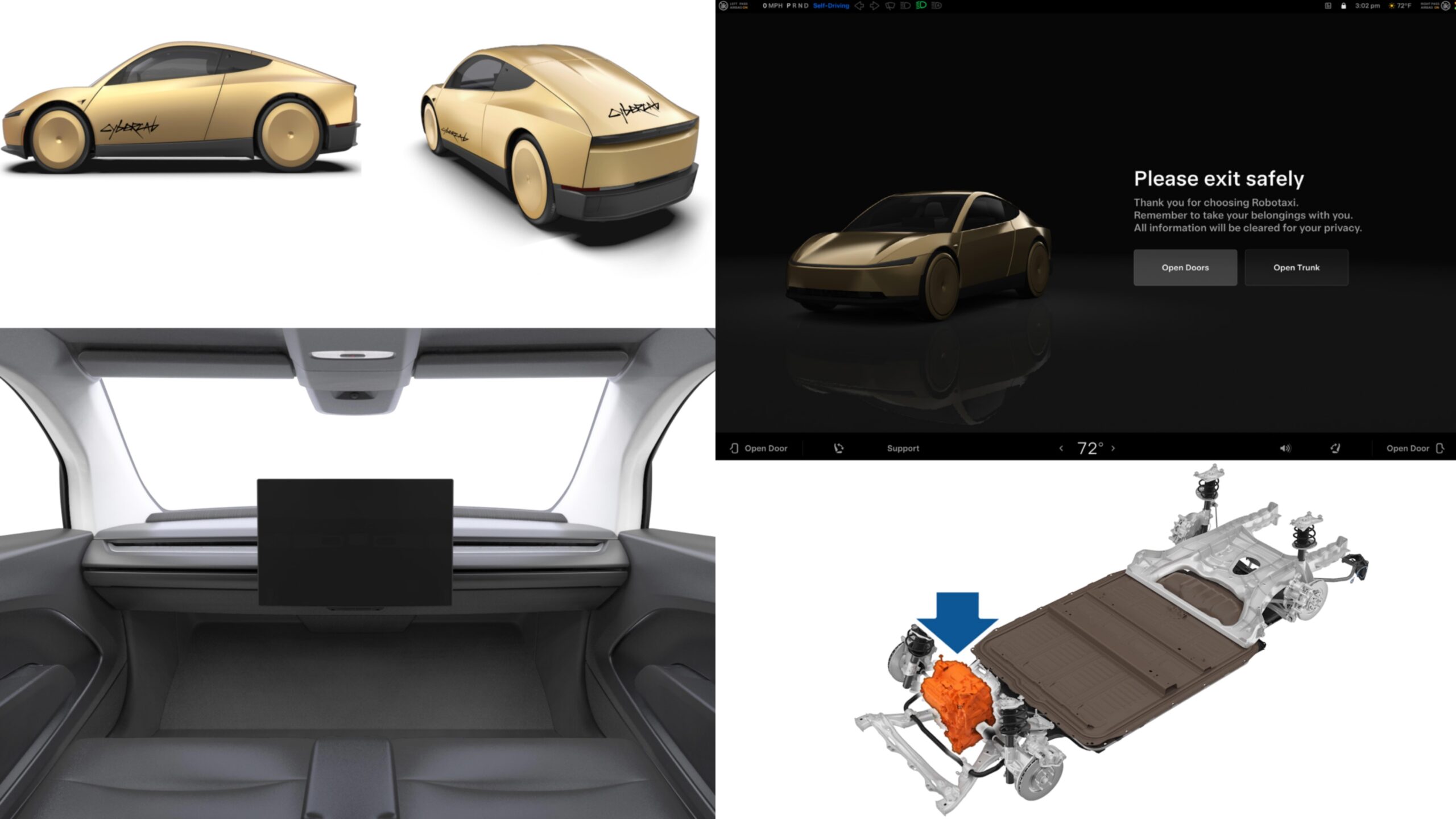
Table of Contents
An emergency guide reveals the production car
Vehicle launches usually lead with range, acceleration and styling. Tesla’s 40-page Cybercab Emergency Response Guide offers another view. Written for trained responders, it maps the high-voltage equipment, airbags, structural reinforcements and areas that crews should not cut. It also explains how to immobilize a vehicle that normally has no steering wheel or pedals.
The manual gives a surprisingly detailed picture of the production vehicle. It describes Cybercab as a two-seat SAE Level 4 autonomous vehicle with a 48-volt low-voltage system, two responder cut loops, powered doors, a rear charge port and remote support. These details are less eye-catching than the gold body, but they show how much engineering sits outside the driving software.
Protecting people outside the vehicle
The Active Hood is one of the more unusual systems. Tesla says it can detect certain pedestrian impacts at roughly 15 to 32 mph. Pyrotechnic actuators lift the rear of the hood to create more space above hard components. Contact with an animal, another vehicle or an object may also trigger it.
Active hoods are not exclusive to autonomous cars, but they make sense on a vehicle expected to spend much of its time in busy public spaces. Robotaxis will operate around pedestrians, cyclists and curbside traffic. Avoiding a crash comes first. Reducing injuries when avoidance fails is a separate job.
The guide also lists motorized seat-belt links that can pull out slack after buckling or when the vehicle anticipates a crash. Autonomy does not change crash physics. A car without a driver still needs restraints, airbags and structures that manage impact energy.
A driverless car needs an emergency interface
In a regular car, an officer or firefighter can speak to the driver, request the key and tell someone to shift into Park. Cybercab removes that chain of command. Tesla instead uses remote support, visible signals and physical procedures.
Responders can call a dedicated Robotaxi support number and ask Tesla to immobilize the car. Speakers on the B-pillars may allow two-way communication with support staff. If that link fails, the guide tells crews to surround the vehicle with visible barriers before approaching. Opening a door or unbuckling an occupied seat belt should stop autonomous movement and select Park, although Tesla tells responders to wait for confirmation before doing more.
Those procedures are part of road safety too. A robotaxi has to show its condition to people who did not build it and may be dealing with an emergency. Responders need clear markings, predictable behavior and a standard way to gain access.
Redundant systems complicate rescue work
Cybercab has systems intended to keep it running, while emergency crews may need to shut everything down. Tesla provides one responder cut loop under the hood and another behind interior trim. Cutting either loop removes low-voltage power from the airbag circuits and opens the high-voltage battery contactors, disconnecting the pack from the rest of the vehicle.
The guide repeatedly warns that the battery pack remains energized. It also marks gas inflators near the roof and a pressurized-air tank between the rear wheels, with hoses running through the vehicle. Rescue crews must avoid cutting or crushing those parts.
The powered doors bring another complication. They improve access in normal use, but damaged struts can leave a door heavy or release springs under load. Features designed for convenience or strength can behave differently after a serious impact.
The practical work behind a robotaxi fleet
An emergency manual cannot prove that Cybercab’s driving system is ready for broad deployment. It does show that Tesla is planning for events a working fleet will eventually face, including crashes, power loss, charging incidents, submersion, fire and towing.
The software is only part of the operation. Firefighters have to identify the vehicle, police need a way to stop it and passengers need to exit when power is lost. A damaged car also has to be moved without creating another hazard, and responders need support at any hour.
The active hood and camera washers are easy details to share. The more practical test is whether emergency crews can approach a disabled Cybercab and know what to do. A robotaxi fleet becomes easier to accept when those procedures are routine and widely understood.
Source
- Sawyer Merritt post: https://x.com/SawyerMerritt/status/2071002354636202324
- Tesla First Responder Information for Robotaxi: https://www.tesla.com/firstresponders/robotaxi
- Tesla Cybercab Emergency Response Guide: https://digitalassets.tesla.com/tesla-contents/image/upload/2026-cybercab-emergency-response-guide.pdf
- Tesla Cybercab First Responder Interaction Plan: https://digitalassets.tesla.com/tesla-contents/image/upload/cybercab-first-responder-interaction-plan.pdf
- Tesla general first-responder resources: https://www.tesla.com/firstresponders