

 由 Sherry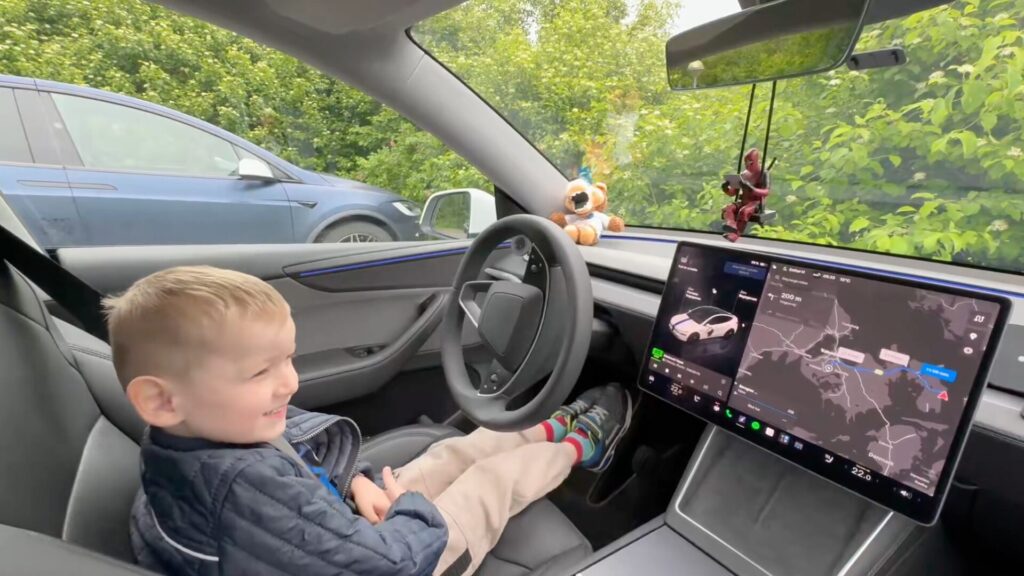
Table of Contents
A Strange Test With a Serious Point
A Tesla owner posted a video showing an attempt to activate FSD with his four-year-old son sitting in the driver’s seat. The point was not to let the child drive. The post framed the video as a demonstration of Tesla’s safety measures: the system did not activate and reportedly displayed a “No driver recognized” message.
It is an odd internet moment, but it raises a serious issue. As FSD becomes more capable, preventing misuse becomes as important as improving the driving stack.
Tesla’s Full Self-Driving is still supervised. The name may sound ambitious, and the software may handle many driving tasks, but the driver remains responsible. That means the system must do more than steer and brake. It must also make sure the person in the driver’s seat is a valid, attentive operator.
Why FSD Refusing to Activate Matters
The video claims FSD did not activate because the car recognized that a proper driver was not present. The post listed several safeguards: eye and head tracking, irregularity detection, prompts for input, and warnings or deactivation triggered by weight, height, or improper handling.
Even if every detail of that specific event should be treated as an owner demonstration rather than formal testing, the concept is important. FSD cannot be safe if it can be casually activated by anyone sitting in the seat. The system must detect whether the driver is present, alert, and physically capable of supervising.
That is especially important because supervised autonomy creates temptation. If the car can drive well, some users will try to push the limits. They may look away, use phones, sit improperly, or treat the system as more autonomous than it is.
Tesla has to design for that behavior, not for perfect users.
Supervised Autonomy Depends on Human Behavior
Tesla’s official FSD materials emphasize that the driver must pay attention and be ready to take over. That is the foundation of supervised autonomy.
But humans are the messy part. Drivers get bored. They overtrust systems. They try shortcuts. They misunderstand marketing. They see impressive videos online and assume the car can handle everything.
Driver monitoring is Tesla’s answer to that behavioral risk. In-cabin cameras, attention alerts, strike systems, and activation restrictions all serve one purpose: keep the human in the loop.
The better FSD becomes, the more important these systems become. A weak system keeps drivers alert because it makes frequent mistakes. A strong system can make drivers complacent because it works well most of the time. That is the paradox of advanced driver assistance.
The Hard Part Is Preventing Overtrust
Misuse is not always malicious. Sometimes it is simply overconfidence.
A driver who sees FSD handle dozens of trips may start believing it can handle every trip. A driver who hears that FSD is “almost robotaxi-like” may forget that the legal and safety boundary has not changed. A driver who experiences smooth automation may stop watching closely.
That is why safety systems need to be strict even when they annoy users. A warning that blocks activation may feel inconvenient, but it protects the system from being used outside its intended design.
This is also why social media demonstrations matter. They reveal how owners think about the system. If people are testing whether FSD can be fooled, Tesla has to assume others may try worse.
Safety Features Are Now Product Features
In the early EV era, Tesla’s product story was acceleration, range, charging, and software updates. In the FSD era, the story also has to include safety enforcement.
That may sound less exciting than neural networks and robotaxis, but it is essential. Regulators, courts, insurers, and the public will not judge FSD only by how well it drives on a clean route. They will judge how it behaves when humans misuse it.
If Tesla can show that FSD refuses unsafe activation, monitors attention, detects irregular behavior, and disengages when needed, it strengthens the case that supervised autonomy can be deployed responsibly.
The child-in-driver-seat video is not a scientific study. But it points to the right question: can the system protect itself from bad use?
For supervised FSD, that may be one of the most important tests of all.