

 由 Sherry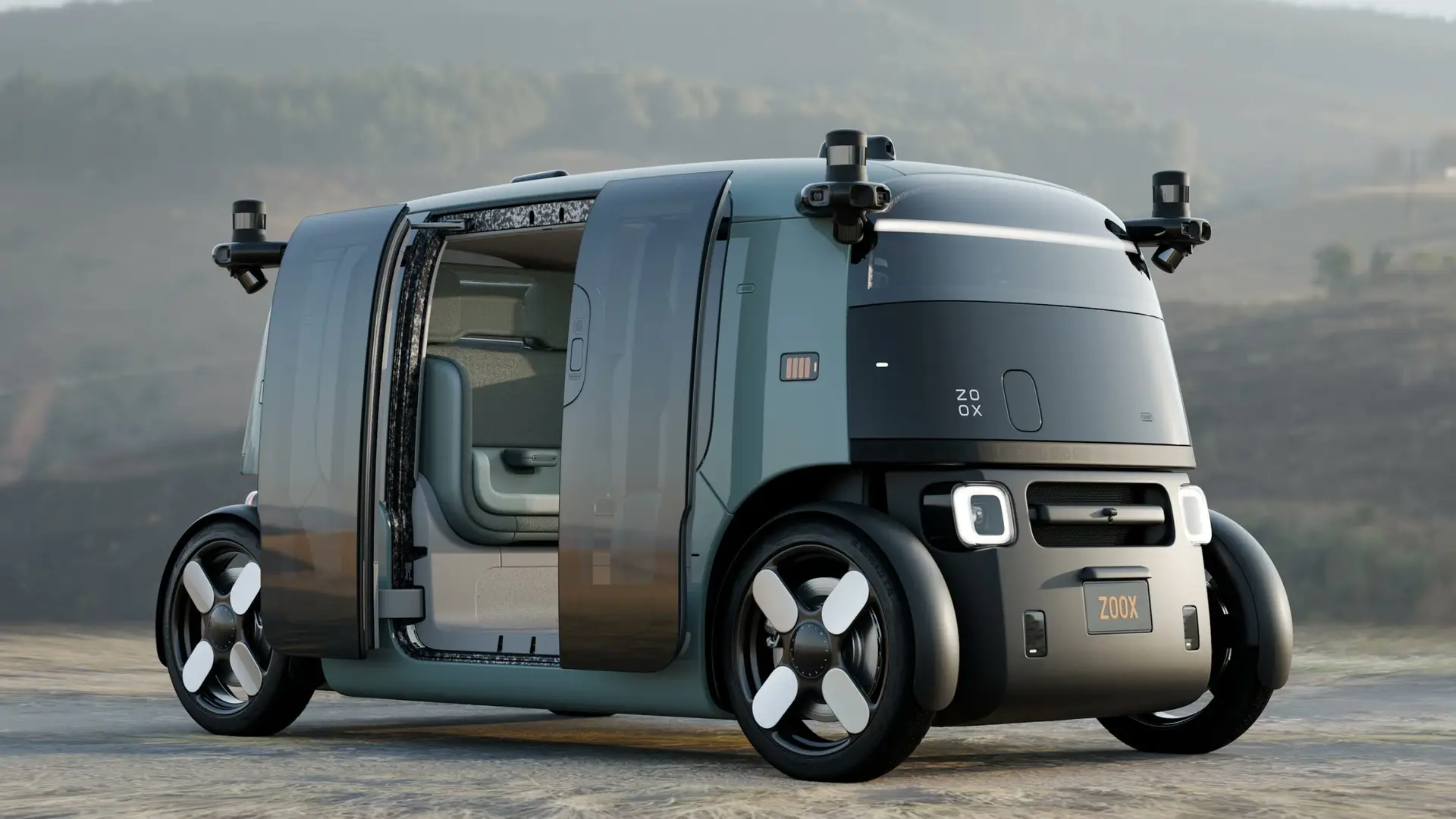
Table of Contents
The robotaxi story is moving downstream
Robotaxis used to be judged by whether a vehicle could drive itself in a polished demo. That is no longer enough. The harder question is whether a company can build, inspect, deploy, maintain, clean, charge, route, and support autonomous vehicles at scale.
Two recent X posts point in that direction. Sawyer Merritt noted that Zoox, owned by Amazon, has unveiled an updated robotaxi that it says is intended for mass production, with stated capacity of up to 100 units per week. Joe Tegtmeyer, meanwhile, showed a newly built Tesla Cybercab leaving the Giga Texas area and moving through what appeared to be factory-related routing.
These are different companies with different strategies, but the shared theme is production maturity. The robotaxi race is becoming less about whether autonomy can look impressive once and more about whether it can become a repeatable industrial system.
Zoox is designing around the passenger cabin
Zoox has always looked different from Tesla because its vehicle is built around ride-hailing rather than private ownership. There is no traditional driver position. The cabin is the product. That makes the updates to seating, headrests, ergonomics, and lighting more than cosmetic details.
A robotaxi passenger judges the ride differently from a car owner. They care about entry, seating comfort, perceived safety, cleanliness, lighting, temperature, and whether the cabin feels normal enough to trust. If there is no driver, the vehicle has to reassure people through design.
Zoox’s reported 100-unit-per-week capacity matters because it suggests the company is thinking beyond pilots. A fleet business needs replacement vehicles, expansion vehicles, test vehicles, and enough consistency to support multiple markets. Still, 100 per week is not mass adoption by itself. It is a step toward proving production discipline.
Cybercab points to Tesla’s factory advantage
Tesla’s Cybercab signal looks different. The Joe Tegtmeyer post is not about a cabin redesign or a press reveal. It is about a vehicle moving through factory-adjacent logistics: leaving Giga Texas, traveling a defined internal route, reaching Superchargers near an end-of-line area, and then moving toward final processing.
That kind of detail matters because Tesla’s advantage may be manufacturing integration. If Cybercab becomes real at scale, Tesla will need more than self-driving software. It will need factory routing, charging workflows, quality checks, post-production software validation, transport processes, and service readiness.
The internal movement of newly built Cybercabs suggests Tesla is already treating the vehicle as something that must flow through an industrial pipeline. That does not prove commercial success, but it is the kind of ordinary operating signal that can matter more than a staged reveal.
Production rate is not service scale
Both companies still face the same gap: building vehicles is not the same as running a profitable robotaxi network. A robotaxi business has to manage safety cases, local permissions, insurance, remote assistance, fleet uptime, charging or fueling, cleaning, vandalism, edge cases, and public trust.
Zoox may benefit from Amazon’s logistics culture and capital discipline. Tesla may benefit from vehicle data, manufacturing speed, charging infrastructure, and an existing customer app. Neither company gets to skip the operating burden.
Autonomy also has to be judged by geography. A vehicle that works in one city, route type, or operating domain does not automatically work everywhere. Robotaxi scaling will likely happen city by city.
The winner may be the best operator
The useful comparison is not simply “which car is cooler?” Zoox is building a service-native vehicle. Tesla is building from a consumer-vehicle and manufacturing base toward autonomy. Zoox may optimize the rider experience from day one. Tesla may optimize production volume and software iteration.
The eventual winner may be the company that connects all the unglamorous pieces: vehicle cost, utilization, cleaning time, charging time, safety reporting, customer trust, and regulatory cooperation. A robotaxi sitting idle is expensive. A robotaxi that needs too much human support is not truly scalable. A robotaxi that people do not trust is not a business.
That is why these posts matter. Zoox talking about a production-intent robotaxi and Tesla moving Cybercabs through a factory route both suggest the industry is entering a more serious phase. The demo era is not over, but the factory work is becoming harder to ignore.
Source
- Sawyer Merritt on X: https://x.com/SawyerMerritt/status/2068764789812125861
- Related X trend: https://x.com/i/trending/2068530602819686420
- Tesla Full Self-Driving (Supervised): https://www.tesla.com/support/full-self-driving-subscriptions